Introduction
Customer service has transformed dramatically in recent years, with businesses increasingly leveraging technology to improve customer interactions. One of the most significant advancements in this space is the use of AI agents for customer service. These AI-powered tools bring a range of benefits, from faster response times to personalized experiences, making them invaluable assets in today’s digital landscape. This article explores how AI agents are shaping customer service, their key advantages, challenges, and the future they promise.
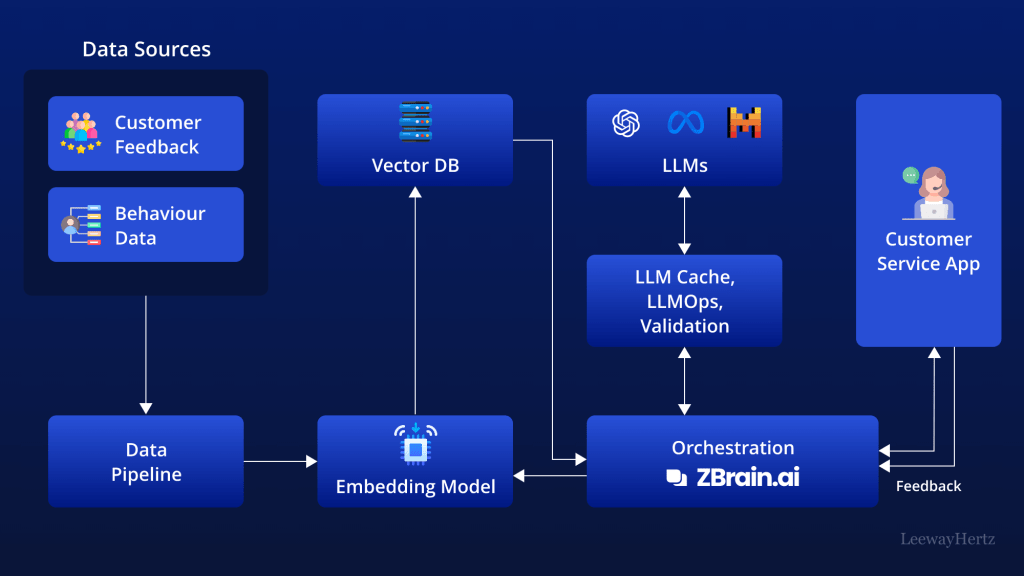
The Role of AI Agents in Modern Customer Service
AI agents for customer service refer to automated systems that can interact with customers through various channels, such as chat, email, or voice. Using natural language processing (NLP) and machine learning, AI agents can understand customer inquiries, provide answers, and assist with tasks. These agents simulate human-like conversations, which enhances user experience and increases efficiency by handling a significant volume of customer queries.
The growing popularity of AI agents stems from their ability to improve service quality and accessibility. They operate 24/7, so customers receive assistance whenever they need it. Additionally, they can handle repetitive tasks, freeing up human representatives to focus on more complex issues that require empathy and nuanced communication.
Benefits of Using AI Agents for Customer Service
1. Reduced Response Time
One of the most significant advantages of AI agents for customer service is the reduction in response times. AI agents can respond instantly to customer queries, providing solutions within seconds. By addressing customer needs quickly, businesses can improve satisfaction levels, especially for customers seeking quick answers to common issues. With AI agents, companies can offer immediate assistance, setting a new standard for efficient customer service.
2. Enhanced Personalization
AI agents can analyze customer data to provide personalized responses. Through machine learning, these agents learn from each interaction, understanding customers’ preferences, history, and behavior. This enables them to tailor responses and recommendations according to individual needs, enhancing customer satisfaction and fostering a positive brand experience. Personalization, once reserved for human representatives, can now be achieved on a large scale with AI agents for customer service.
3. Cost Savings
Implementing AI agents for customer service can lead to substantial cost savings. By automating repetitive tasks, businesses reduce the need for extensive customer service teams, especially for tasks like answering FAQs or simple troubleshooting. This not only lowers operational costs but also boosts the team’s productivity as they focus on higher-priority cases. Ultimately, this streamlined approach benefits both the business and the customers it serves.
4. Scalability and Consistency
AI agents offer a level of scalability and consistency that’s difficult for human teams to match. As businesses grow, customer service demands also increase, and it can be challenging to scale human teams accordingly. AI agents, however, can easily handle fluctuating volumes of inquiries without compromising response quality. This consistent performance is essential in maintaining customer satisfaction, as the AI agents deliver standardized responses every time.
Challenges Faced by AI Agents for Customer Service
1. Handling Complex Issues
While AI agents excel at addressing routine inquiries, they can struggle with complex or emotionally sensitive issues. Some customer interactions require a high level of empathy and understanding, which AI agents can find challenging to replicate. In these situations, AI agents may need to transfer the case to a human representative. Although technology is advancing, the lack of true human empathy remains a limitation for AI agents in customer service.
2. Misinterpretation of Customer Intent
AI agents rely on algorithms to interpret customer intent, but misunderstandings can still occur. For instance, ambiguous language or slang may lead to incorrect responses. Though AI systems are improving in their ability to interpret language nuances, this remains a concern. Businesses need to monitor AI interactions closely to minimize potential misinterpretations, ensuring the accuracy and effectiveness of AI agents for customer service.
3. Privacy and Data Security
AI agents for customer service often require access to sensitive customer information to provide personalized responses. Ensuring data privacy and security is essential, as any breach could lead to significant customer trust issues. Companies must prioritize data protection measures, regularly auditing AI systems to safeguard customer information. Addressing these concerns is key to maintaining customer confidence in AI-powered customer service.
Future Prospects: The Evolving Landscape of AI Agents for Customer Service
1. Enhanced Human-AI Collaboration
The future of AI agents for customer service lies in fostering a seamless collaboration between human representatives and AI systems. Instead of completely replacing human agents, AI is expected to complement them, handling simpler tasks while leaving complex issues to skilled representatives. This collaborative approach is already gaining traction, with many businesses training their customer service teams to work alongside AI agents, creating a more efficient and effective service ecosystem.
2. Improved Language Processing and Emotional Recognition
As technology advances, AI agents are expected to improve in recognizing and responding to emotional cues. Through advanced sentiment analysis, future AI systems may better detect customer frustration, anger, or satisfaction. This capability could help agents adapt responses based on customers’ emotional states, creating more empathetic interactions. Improved language processing will also lead to fewer misunderstandings, further enhancing customer experiences.
3. Expanding Multi-Channel Capabilities
AI agents for customer service are increasingly capable of interacting across multiple channels, including social media, messaging apps, and email. In the coming years, we can expect this trend to grow, with AI agents adapting to new platforms and communication methods. Multi-channel AI support not only increases convenience for customers but also strengthens brand presence by offering consistent support across all platforms.
Conclusion: AI Agents as a Catalyst for Customer Service Transformation
The rise of AI agents for customer service is a game-changer in how businesses interact with their customers. By reducing response times, enhancing personalization, and cutting costs, AI agents offer clear benefits to both companies and customers. Despite some challenges, such as handling complex issues and ensuring data privacy, the potential of AI agents is vast. As technology continues to advance, AI agents will play an increasingly central role in customer service, helping businesses provide support that’s faster, more efficient, and more personalized than ever before.
In the evolving world of customer service, AI agents are no longer just a tool but a critical element of a modern, customer-centric strategy. Businesses that leverage AI effectively are likely to set new benchmarks for customer service quality, leading to greater customer loyalty and satisfaction. The future is bright for AI agents in customer service, promising enhanced support that’s both intelligent and accessible to all.
 New Tech news
Leave a comment