Introduction
Generative AI in manufacturing is transforming the way industries operate by streamlining processes, improving product designs, and enhancing overall efficiency. This innovative technology allows manufacturers to stay competitive in an increasingly complex global market. In this article, we will explore how generative AI is changing the manufacturing landscape, the benefits it offers, and how it is paving the way for the future of production.
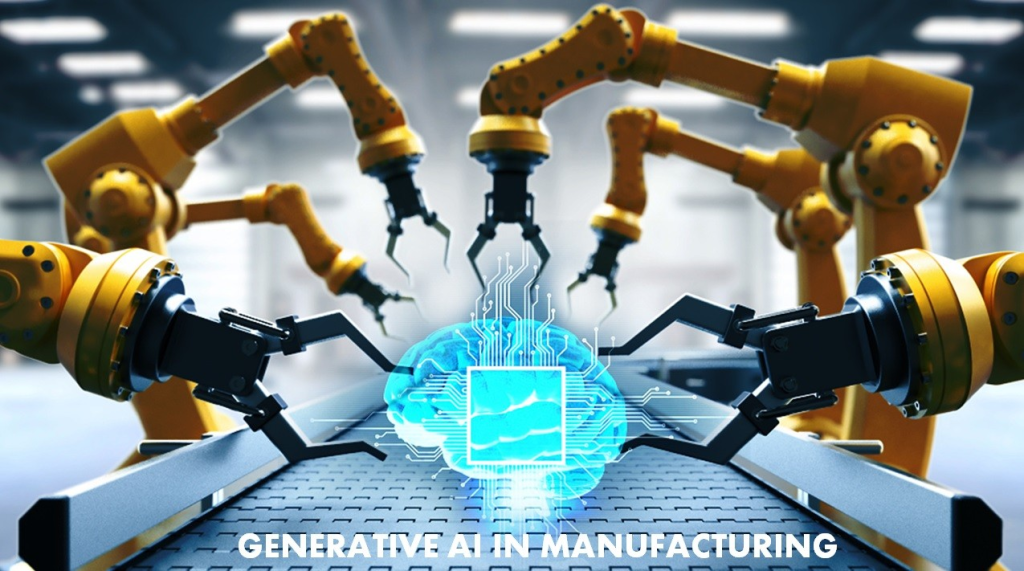
Understanding Generative AI in Manufacturing
Generative AI in manufacturing refers to the application of machine learning algorithms and artificial intelligence to automate and optimize various aspects of production. This includes designing products, enhancing workflows, and identifying potential inefficiencies in the manufacturing process. With its ability to generate new designs, ideas, and solutions based on a given set of parameters, generative AI is offering manufacturers innovative ways to address long-standing challenges.
The primary advantage of generative AI is its capability to analyze large amounts of data and predict potential outcomes. By doing so, it enables manufacturers to make informed decisions, minimize risks, and reduce costs. In a field where precision and efficiency are critical, generative AI brings a powerful toolset to improve product development and operational performance.
Enhancing Product Design with Generative AI
One of the most impactful uses of generative AI in manufacturing is in the field of product design. Traditional design methods often involve trial and error, leading to a slow, expensive, and inefficient process. Generative AI, however, changes this by allowing engineers to input design parameters, such as material type, weight, cost, and strength, and then let the AI algorithm generate multiple design solutions.
These AI-generated designs are not just theoretical concepts; they are optimized for real-world applications. By considering various factors like material limitations and manufacturing techniques, generative AI helps create designs that are both innovative and practical. This approach leads to lighter, stronger, and more efficient products, often reducing material waste in the process.
For example, generative AI can be used to create complex structures that were previously impossible or impractical to design manually. These designs not only meet functional requirements but also offer improved aesthetics, performance, and sustainability. The integration of generative AI in product design is accelerating the innovation cycle, allowing companies to bring new products to market faster and at a lower cost.
Optimizing Manufacturing Processes
Generative AI in manufacturing goes beyond just product design. It also plays a vital role in optimizing production processes. By analyzing data from different stages of manufacturing, generative AI can identify bottlenecks, predict potential disruptions, and suggest ways to improve efficiency.
This process optimization is essential for manufacturers looking to maximize productivity and reduce downtime. AI-powered systems can monitor production lines in real-time, detecting anomalies or inefficiencies and offering solutions before problems escalate. Additionally, generative AI can be used to simulate entire production workflows, allowing companies to test new processes without disrupting ongoing operations.
For instance, if a manufacturer wants to experiment with a new production method, they can use generative AI to simulate different scenarios and outcomes. This allows them to identify the most efficient approach without the costly and time-consuming trial-and-error process. In the long run, these optimizations lead to significant cost savings and higher production output.
Reducing Waste and Promoting Sustainability
Sustainability is becoming an increasingly important focus in modern manufacturing, and generative AI is proving to be a valuable ally in achieving these goals. Traditional manufacturing processes often result in significant material waste due to inefficient designs or outdated production methods. By using generative AI, manufacturers can minimize this waste through optimized designs and processes.
For example, generative AI can analyze material usage and identify areas where resources are being wasted. It can then propose alternative designs or production methods that use fewer materials or require less energy to produce. This not only reduces waste but also lowers production costs and environmental impact.
In addition, generative AI can assist in recycling processes by identifying the best ways to reuse materials or suggesting designs that are easier to recycle. As industries worldwide work to reduce their carbon footprint, the role of generative AI in promoting sustainable manufacturing practices is becoming more crucial.
Improving Supply Chain Management
Another area where generative AI in manufacturing is making a significant impact is supply chain management. The supply chain is a complex network of suppliers, manufacturers, and distributors, and any disruptions can have a significant effect on production. Generative AI helps manufacturers predict potential supply chain disruptions and adjust their operations accordingly.
By analyzing data from suppliers, transportation routes, and market demand, generative AI can forecast potential delays or shortages and suggest alternative sourcing strategies. This proactive approach allows manufacturers to maintain smooth operations, even in the face of unexpected challenges. Additionally, AI can optimize inventory management by predicting demand patterns and ensuring that the right amount of stock is available at the right time.
The use of generative AI in supply chain management results in improved efficiency, reduced costs, and a more resilient production system. It ensures that manufacturers can respond quickly to changes in the market while minimizing the risk of production delays.
The Future of Generative AI in Manufacturing
Generative AI in manufacturing is still in its early stages, but its potential is immense. As AI technology continues to evolve, we can expect even more sophisticated applications that will further transform the manufacturing industry. From advanced robotics that can autonomously manage production lines to AI-driven quality control systems that can detect defects with unprecedented accuracy, the future of manufacturing looks promising.
One of the key trends to watch is the integration of generative AI with other technologies such as the Internet of Things (IoT) and digital twins. This convergence will allow manufacturers to create highly intelligent, connected systems capable of self-optimization and continuous improvement.
As generative AI becomes more accessible and affordable, it will be adopted by manufacturers of all sizes, enabling even small businesses to leverage the power of AI to enhance their production processes. In the long term, generative AI will lead to a more efficient, sustainable, and innovative manufacturing sector.
Conclusion
Generative AI in manufacturing is a game-changer for the industry, offering new ways to enhance product design, optimize processes, reduce waste, and improve supply chain management. Its ability to analyze data, generate solutions, and predict outcomes makes it an invaluable tool for manufacturers looking to stay competitive in a rapidly evolving market. As technology continues to advance, the role of generative AI in manufacturing will only grow, paving the way for a more efficient and sustainable future in production.
 New Tech news
Leave a comment