Introduction to Generative AI in Legal
Generative AI in legal is rapidly reshaping the landscape of the legal profession. As technology continues to advance, the integration of artificial intelligence within the legal field has become increasingly essential. Generative AI refers to systems that can create content, analyze data, and even predict outcomes based on existing information. In the context of law, this technology holds the potential to enhance efficiency, reduce costs, and improve access to legal services.
Enhancing Legal Research with Generative AI
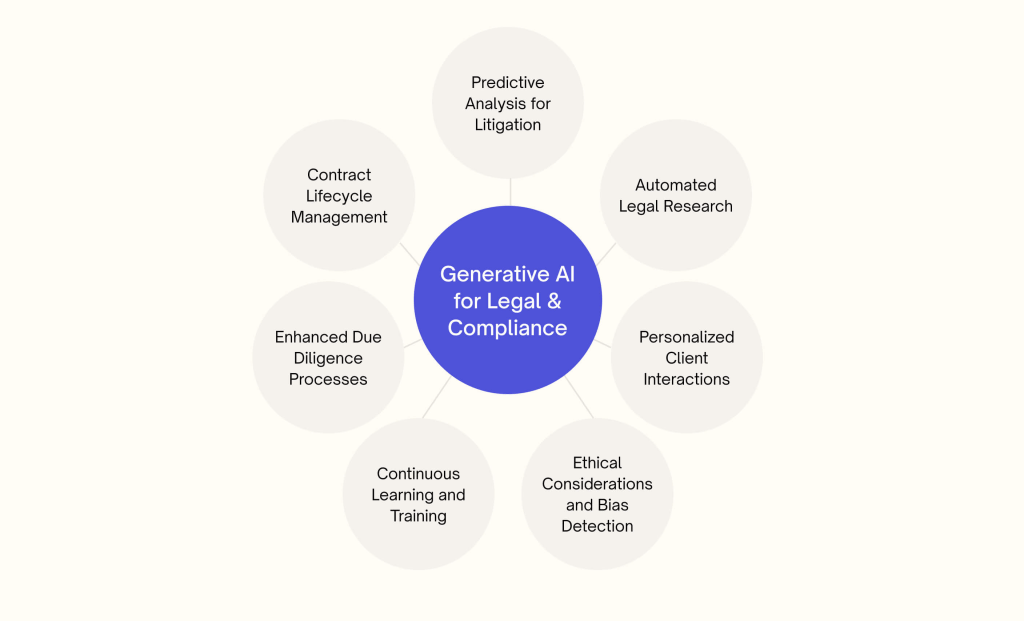
One of the most significant benefits of generative AI in legal is its ability to streamline the research process. Traditionally, legal research is a time-consuming and labor-intensive task, requiring attorneys to sift through vast amounts of case law, statutes, and legal precedents. Generative AI can quickly analyze large datasets, identify relevant information, and even summarize findings.
This capability not only saves time but also reduces the likelihood of human error. By automating the research process, attorneys can focus on higher-level tasks, such as strategy development and client interaction. Moreover, generative AI can continuously learn from new data, ensuring that legal professionals have access to the most current information available.
Drafting Legal Documents: A Game Changer
Drafting legal documents is another area where generative AI in legal can make a significant impact. Creating contracts, briefs, and other legal documents often involves repetitive tasks and complex language. Generative AI can assist in drafting these documents by generating templates based on specific parameters provided by the user.
Additionally, this technology can analyze previous documents to identify patterns and suggest improvements. This results in more accurate and efficient document preparation, freeing attorneys to focus on the substantive aspects of their work. Furthermore, generative AI can help ensure compliance with legal standards by automatically incorporating necessary clauses and language.
Predictive Analytics: Improving Decision-Making
Generative AI in legal also offers the advantage of predictive analytics, which can aid legal professionals in making informed decisions. By analyzing historical data, AI systems can identify trends and predict potential outcomes of legal cases. This predictive capability can assist attorneys in assessing the strengths and weaknesses of their cases, allowing for more strategic planning.
For instance, if a lawyer is preparing for a trial, generative AI can analyze similar cases to provide insights into how juries have previously reacted to specific arguments. This information can be invaluable when developing trial strategies and negotiating settlements. By utilizing predictive analytics, legal professionals can make more informed decisions that ultimately benefit their clients.
Improving Client Engagement and Access to Justice
The incorporation of generative AI in legal can also enhance client engagement and accessibility to legal services. Many individuals and small businesses face challenges in accessing affordable legal representation. Generative AI can help bridge this gap by offering solutions such as chatbots that provide instant legal advice and assistance.
These AI-driven platforms can answer common legal questions, guide users through basic legal processes, and even generate simple legal documents. By providing immediate support, generative AI can empower clients to better understand their legal rights and options. This increased access to information can lead to more informed decision-making and ultimately improve outcomes for clients.
Ethical Considerations in Generative AI in Legal
As with any technological advancement, the use of generative AI in legal raises important ethical considerations. Issues such as data privacy, bias in AI algorithms, and the potential for over-reliance on technology must be carefully examined. Legal professionals must ensure that they use AI responsibly and transparently, maintaining the integrity of the legal process.
Moreover, the implementation of generative AI should not replace the critical thinking and judgment that attorneys bring to their work. Instead, it should be viewed as a complementary tool that enhances their capabilities. Ongoing training and awareness of the limitations of generative AI are essential to mitigate any risks associated with its use.
Future Prospects of Generative AI in Legal
Looking ahead, the future of generative AI in legal appears promising. As technology continues to evolve, legal professionals can expect even more sophisticated tools that enhance their practice. Innovations such as natural language processing and machine learning will further refine the capabilities of generative AI, allowing for more nuanced understanding and analysis of legal matters.
The potential for generative AI to transform the legal landscape is vast, from improving operational efficiency to enhancing client service. As legal firms and professionals embrace these technologies, they will be better equipped to navigate the complexities of the modern legal environment.
Conclusion
Generative AI in legal is not just a passing trend; it represents a fundamental shift in how legal services are delivered and consumed. By enhancing research capabilities, improving document drafting, and providing predictive insights, this technology has the potential to revolutionize the legal profession. While ethical considerations must be addressed, the benefits of generative AI far outweigh the challenges.
As the legal industry continues to adapt to technological advancements, generative AI will play an integral role in shaping its future. Legal professionals who embrace this change will find themselves better positioned to serve their clients and navigate the complexities of the legal landscape.
 New Tech news
Leave a comment