Introduction to Generative AI in Finance and Banking
Generative AI has emerged as a revolutionary technology, reshaping various industries, including finance and banking. This innovative branch of artificial intelligence can generate new content, from text to images, and is increasingly being integrated into financial services. The utilization of generative AI in finance and banking enhances operational efficiency, customer experience, and decision-making processes, making it a pivotal component of modern financial ecosystems.
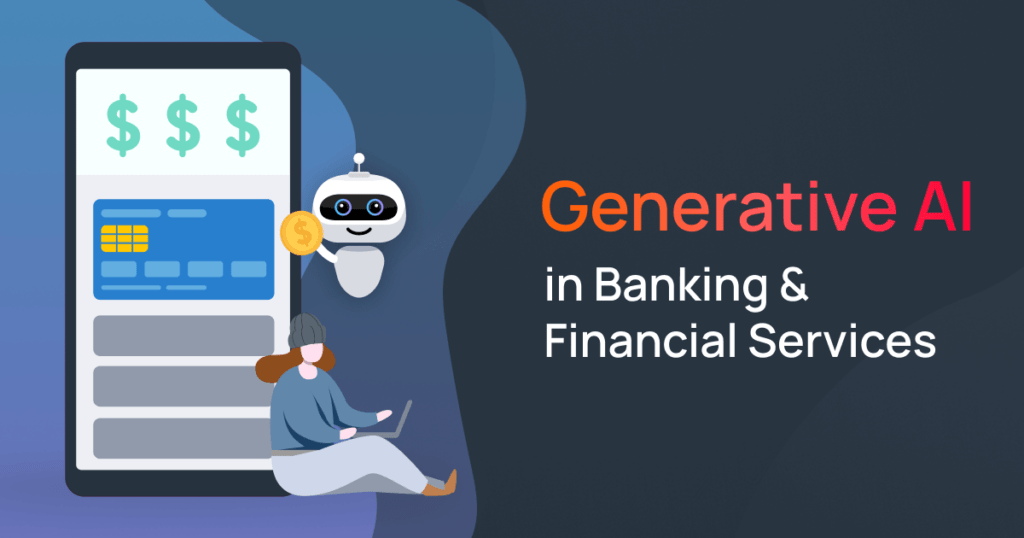
Understanding Generative AI
Generative AI refers to algorithms that can create new data or content based on the patterns and structures of existing data. Unlike traditional AI, which primarily focuses on recognizing patterns and making predictions, generative AI can produce new, unique outputs. This capability allows for creative applications in finance and banking, ranging from personalized customer interactions to advanced risk assessment models.
Enhancing Customer Experience
One of the primary applications of generative AI in finance and banking is enhancing customer experience. Financial institutions are utilizing this technology to create personalized services and products. For instance, chatbots powered by generative AI can engage customers in natural, human-like conversations, answering queries and providing assistance 24/7. This level of accessibility improves customer satisfaction and fosters a deeper connection between the bank and its clients.
Moreover, generative AI can analyze customer data to tailor recommendations. By understanding individual preferences and behaviors, financial institutions can offer personalized investment advice, product recommendations, and financial planning strategies. This targeted approach not only improves customer engagement but also increases the likelihood of successful conversions.
Risk Management and Fraud Detection
Risk management is crucial in finance and banking, and generative AI plays a significant role in enhancing these processes. The technology can generate synthetic data that helps in training machine learning models for risk assessment and fraud detection. By simulating various scenarios, generative AI can identify potential risks and vulnerabilities that might be overlooked by traditional methods.
In the realm of fraud detection, generative AI can create a more comprehensive understanding of transaction patterns. By analyzing both legitimate and fraudulent transactions, financial institutions can develop sophisticated algorithms that detect anomalies in real-time. This proactive approach not only mitigates risks but also protects customers from potential fraud, ensuring a safer banking environment.
Streamlining Operations
Generative AI in finance and banking also contributes to operational efficiency. By automating routine tasks such as data entry, document generation, and compliance checks, financial institutions can reduce operational costs and minimize human error. This allows employees to focus on more strategic initiatives, ultimately leading to improved productivity.
Additionally, generative AI can assist in generating financial reports and forecasts. By analyzing historical data, the technology can create accurate predictions about market trends, helping financial professionals make informed decisions. This capability is particularly valuable in investment banking, where timely and accurate data is essential for success.
Improving Regulatory Compliance
Compliance with regulations is a significant challenge for financial institutions. Generative AI can help streamline compliance processes by generating reports and ensuring that all necessary documentation is in place. The technology can analyze vast amounts of data to identify potential compliance issues, enabling proactive measures to be taken before they become significant problems.
Moreover, generative AI can assist in automating compliance training programs. By creating realistic scenarios and simulations, employees can better understand regulatory requirements and the importance of compliance. This immersive learning experience leads to a more compliant workforce and reduces the risk of costly violations.
Future of Generative AI in Finance and Banking
As technology continues to evolve, the future of generative AI in finance and banking looks promising. Financial institutions are increasingly recognizing the potential of this technology to drive innovation and improve service delivery. The integration of generative AI is expected to accelerate, leading to more advanced applications such as predictive analytics and enhanced decision-making tools.
Furthermore, the continuous improvement of natural language processing will enhance the capabilities of chatbots and virtual assistants. These advancements will enable financial institutions to provide even more personalized and efficient customer service, further solidifying their competitive edge.
Conclusion
In conclusion, generative AI in finance and banking is a game-changer, offering transformative benefits that enhance customer experience, streamline operations, improve risk management, and ensure regulatory compliance. As financial institutions continue to embrace this innovative technology, the landscape of finance and banking will undoubtedly evolve, leading to more efficient and customer-centric services. The ongoing advancements in generative AI hold the promise of a brighter future for the financial industry, characterized by enhanced efficiency, security, and customer satisfaction. Embracing generative AI is not just an option but a necessity for financial institutions aiming to thrive in the digital age.
 New Tech news
Leave a comment