Building a Generative Pre-trained Transformer (GPT) model can seem daunting, but with the right guidance, you can create your own. This article will outline the essential steps to build a GPT model, ensuring clarity and simplicity throughout the process.
Understanding the Basics of GPT Models
Before diving into the technical details, it’s crucial to understand what a GPT model is. GPT models are a type of artificial intelligence designed to generate human-like text. They are trained on diverse datasets and can complete tasks such as writing, summarizing, and answering questions. Familiarizing yourself with the basic concepts will make it easier to follow the subsequent steps.
Step 1: Define Your Objectives
The first step in how to build a GPT model is to clearly define your objectives. What specific tasks do you want your model to perform? Whether it’s for content generation, conversational AI, or another purpose, having a clear goal will guide your development process.
Step 2: Gather and Prepare Your Data
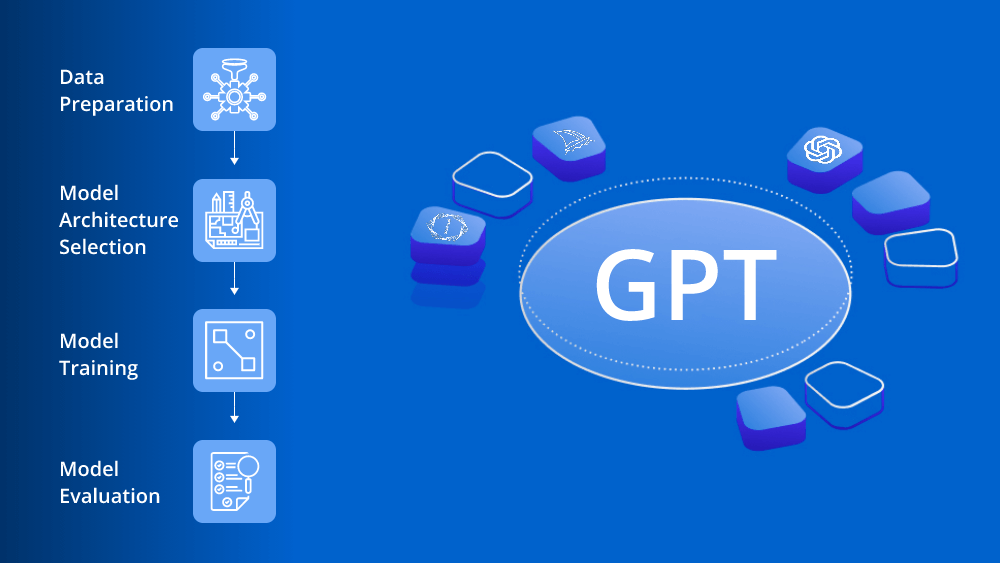
Data is the backbone of any machine learning model. For a GPT model, you’ll need a large and diverse dataset. Sources can include books, articles, websites, and more. Once you have your data, it’s crucial to preprocess it. This involves cleaning the text, removing unnecessary formatting, and possibly tokenizing it. Properly prepared data ensures that your model learns effectively.
Step 3: Choose the Right Framework
To build a GPT model, you need to select an appropriate machine learning framework. Several options are available, each with its advantages. Popular frameworks for deep learning include TensorFlow and PyTorch. These frameworks provide the necessary tools to create and train your model, making it easier to implement your ideas.
Step 4: Model Architecture
Understanding the architecture of a GPT model is essential. At its core, the model consists of layers of transformers, which are neural networks designed to process sequential data. You will need to define the number of layers, the size of the hidden states, and the number of attention heads. This step requires careful consideration, as the architecture will significantly impact your model’s performance.
Step 5: Training Your Model
Now that you have your data and architecture set up, it’s time to train your model. This process involves feeding your prepared data into the model and adjusting the weights based on the errors it makes. Training a GPT model can be computationally intensive, requiring significant processing power and time. You may want to use GPUs to speed up the training process.
Hyperparameter Tuning
During training, you’ll also need to fine-tune hyperparameters. These include learning rate, batch size, and dropout rates. Experimenting with different hyperparameters can help you achieve better performance. Make sure to track your results and adjust your parameters based on the model’s behavior.
Step 6: Evaluation and Testing
Once your model is trained, it’s time to evaluate its performance. Use a separate validation dataset to test how well your model generalizes to new data. Common evaluation metrics for GPT models include perplexity and accuracy. Analyzing these metrics will help you understand your model’s strengths and weaknesses.
Step 7: Deployment
After evaluating your model, you can move on to deployment. This step involves integrating your GPT model into an application or service. Depending on your objectives, you might want to create an API or a user interface. Ensure that your model is accessible and easy to use, allowing others to benefit from its capabilities.
Step 8: Continuous Improvement
Building a GPT model is not a one-time task. To ensure its longevity and effectiveness, you should continually monitor its performance and gather user feedback. Use this information to make iterative improvements. Regular updates and retraining with new data can significantly enhance the model’s performance over time.
Conclusion
Learning how to build a GPT model involves several steps, from defining your objectives to deploying and improving the model. By following this guide, you’ll be equipped with the knowledge needed to create a powerful AI tool tailored to your specific needs. Remember, the key to success lies in continuous learning and adaptation. As you gain experience, you’ll refine your process and produce even more effective models. Happy building!
 New Tech news
Leave a comment