Introduction
The financial industry is evolving rapidly, and one of the most significant advancements is the integration of AI in loan underwriting. This technology is transforming how loans are evaluated, providing both lenders and borrowers with a more efficient, accurate, and fair process. In this article, we will explore how AI in loan underwriting works, its benefits, and its impact on the future of lending.
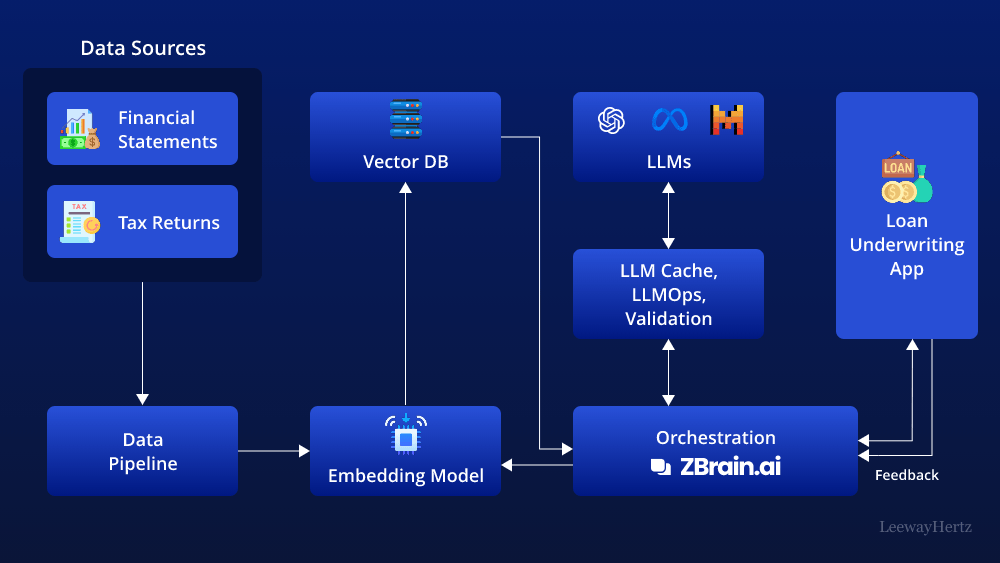
What is AI in Loan Underwriting?
AI in loan underwriting refers to the use of artificial intelligence technologies to assess and approve loan applications. Traditionally, loan underwriting involved extensive manual processes and relied heavily on human judgment. However, with the advent of AI, this process has become more automated and data-driven.
AI in loan underwriting leverages machine learning algorithms and predictive analytics to analyze vast amounts of data quickly. These systems can evaluate a borrower’s creditworthiness by examining factors such as credit scores, income, employment history, and even social media activity. By processing this information more efficiently than human underwriters, AI can provide faster and more accurate loan decisions.
How AI is Revolutionizing Loan Underwriting
- Enhanced Accuracy and Reduced Bias
One of the primary benefits of AI in loan underwriting is its ability to reduce human bias. Traditional underwriting can be influenced by unconscious biases, leading to unequal treatment of applicants. AI systems, on the other hand, rely on data and algorithms, which can minimize subjective judgment.
AI in loan underwriting can analyze a broader range of data points, providing a more comprehensive view of a borrower’s financial health. This enhanced accuracy ensures that loan decisions are based on objective criteria rather than personal prejudices, leading to fairer outcomes for all applicants.
- Faster Processing Times
AI in loan underwriting significantly speeds up the processing times for loan applications. Where traditional methods might involve days or even weeks of evaluation, AI systems can complete these processes in a matter of minutes. This rapid processing benefits both lenders and borrowers by accelerating loan approvals and disbursements.
For lenders, faster processing means they can handle a higher volume of applications, improving their efficiency and profitability. For borrowers, quicker decisions mean they can access the funds they need without prolonged waiting periods.
- Cost Efficiency
Implementing AI in loan underwriting can lead to substantial cost savings for financial institutions. By automating repetitive tasks and reducing the need for manual intervention, AI helps streamline operations and lowers administrative costs. These savings can be passed on to customers in the form of lower interest rates or reduced fees.
Additionally, AI systems can reduce errors and omissions that might occur with human underwriters, further contributing to cost efficiency. Fewer mistakes lead to fewer costly corrections and compliance issues.
Challenges and Considerations
While AI in loan underwriting offers numerous benefits, it also comes with challenges that need to be addressed. One of the main concerns is the reliance on data quality. AI systems are only as good as the data they are trained on, and poor-quality or biased data can lead to inaccurate results.
Another challenge is ensuring transparency and accountability in AI decision-making. It’s crucial for financial institutions to understand how AI algorithms arrive at their conclusions to ensure that they comply with regulations and ethical standards.
The Future of AI in Loan Underwriting
The integration of AI in loan underwriting is still evolving, and its future looks promising. As technology advances, we can expect even more sophisticated AI systems that offer greater accuracy and efficiency. Innovations in AI could lead to more personalized loan offerings, where borrowers receive tailored loan terms based on their unique financial profiles.
Moreover, the use of AI in loan underwriting could extend beyond traditional financial institutions. Alternative lenders and fintech companies are also exploring AI-driven approaches, potentially broadening access to credit for underserved populations.
Conclusion
AI in loan underwriting is transforming the lending landscape by enhancing accuracy, speeding up processing times, and improving cost efficiency. While there are challenges to overcome, the benefits of AI make it a valuable tool for both lenders and borrowers. As technology continues to advance, AI in loan underwriting will likely play an increasingly central role in shaping the future of finance.
By understanding and leveraging AI in loan underwriting, financial institutions can offer better services, and borrowers can enjoy a more efficient and equitable lending process. As we move forward, embracing AI will be key to staying competitive in the evolving financial industry.
 New Tech news
Leave a comment