Introduction
In the rapidly evolving landscape of technology, artificial intelligence (AI) is reshaping industries and driving innovation. One of the most significant impacts of AI is in product development. By harnessing the power of AI, companies are streamlining processes, enhancing creativity, and accelerating time-to-market. This article explores how AI in product development is transforming traditional practices and leading to smarter, more efficient outcomes.
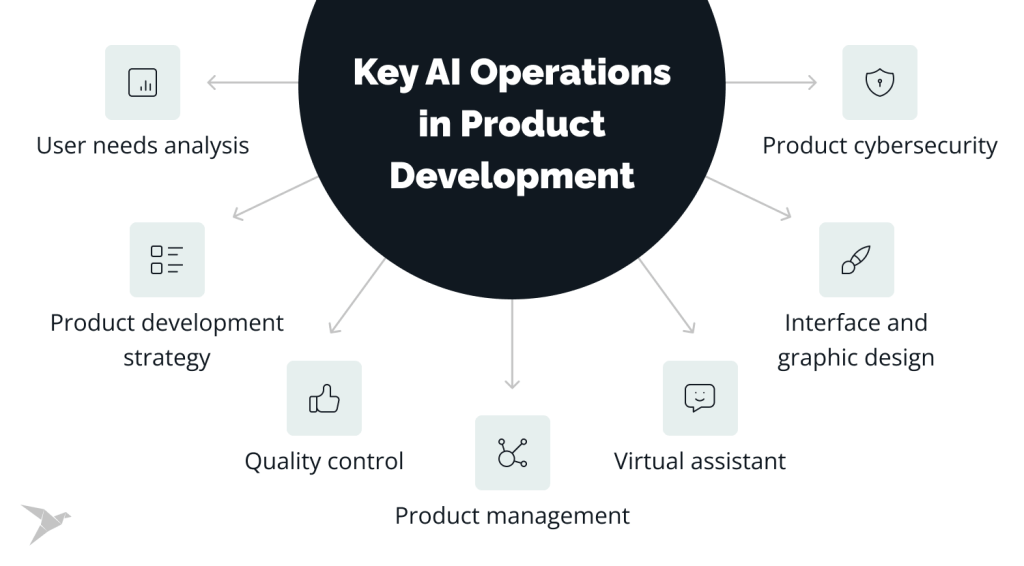
The Role of AI in Product Development
AI in product development is revolutionizing how products are conceived, designed, and brought to market. Traditionally, product development involved a linear process of research, design, testing, and launch. However, AI introduces a dynamic approach that integrates data-driven insights and automation to enhance each phase.
- Data-Driven Insights
AI excels in processing and analyzing vast amounts of data quickly. In product development, this means leveraging AI to gather insights from customer feedback, market trends, and competitor analysis. By understanding these patterns, teams can make informed decisions that align with market needs and preferences. For instance, AI algorithms can analyze customer reviews to identify common pain points, guiding the development of features that address these issues.
- Enhanced Design Capabilities
AI in product development significantly enhances design capabilities. Machine learning algorithms can generate and evaluate numerous design variations in a fraction of the time it would take a human. This not only accelerates the design process but also fosters innovation by exploring unconventional solutions. AI tools can also simulate real-world conditions, allowing designers to test and refine their concepts virtually before physical prototyping.
- Predictive Analytics for Market Success
Predictive analytics powered by AI is another critical advantage in product development. By analyzing historical data and market trends, AI can forecast potential success factors for new products. This helps teams anticipate customer preferences and market demands, reducing the risk of launching products that may not resonate with the target audience. AI-driven predictions can also optimize pricing strategies and marketing campaigns.
Streamlining the Development Process
AI in product development is not just about enhancing creativity; it also streamlines the development process itself. Automation plays a crucial role in reducing manual tasks and improving efficiency.
- Automated Testing and Quality Assurance
AI can automate various testing processes, from functionality checks to performance evaluations. Automated testing tools powered by AI can identify defects and inconsistencies more accurately and faster than traditional methods. This ensures higher product quality and reduces the time and cost associated with manual testing. AI can also predict potential failure points and suggest improvements before a product reaches the market.
- Efficient Resource Management
Resource management is another area where AI proves invaluable. AI algorithms can optimize resource allocation by analyzing project requirements, team capabilities, and timelines. This ensures that resources are used efficiently, minimizing waste and maximizing productivity. For example, AI can assist in scheduling tasks, predicting potential delays, and reallocating resources as needed.
Challenges and Considerations
While the benefits of AI in product development are significant, there are also challenges to consider. Implementing AI requires a substantial investment in technology and expertise. Additionally, ensuring data privacy and addressing ethical concerns related to AI decision-making are crucial. It is important for organizations to address these challenges proactively to fully leverage the advantages of AI.
Future Outlook
The future of AI in product development looks promising. As AI technology continues to advance, its applications will become even more sophisticated and integrated into the product development lifecycle. We can expect more personalized and intuitive products, driven by deeper insights and more accurate predictions. The ongoing evolution of AI will undoubtedly lead to new innovations and opportunities in the field.
Conclusion
AI in product development is a game-changer, offering unprecedented opportunities for innovation and efficiency. From data-driven insights and enhanced design capabilities to streamlined processes and predictive analytics, AI is transforming how products are developed and brought to market. As technology advances, the role of AI will become even more integral to successful product development strategies. Embracing AI is not just a trend but a necessary step for staying competitive in an ever-evolving market.
 New Tech news
Leave a comment