Agentic RAG (Retrieval-Augmented Generation) is an innovative approach that enhances traditional artificial intelligence models by combining retrieval and generation processes. By integrating these components, Agentic RAG significantly improves the performance of AI systems, making them more responsive, context-aware, and capable of handling complex tasks. In this article, we will explore what Agentic RAG is, its types, applications, and how to implement it effectively.
What is Agentic RAG?
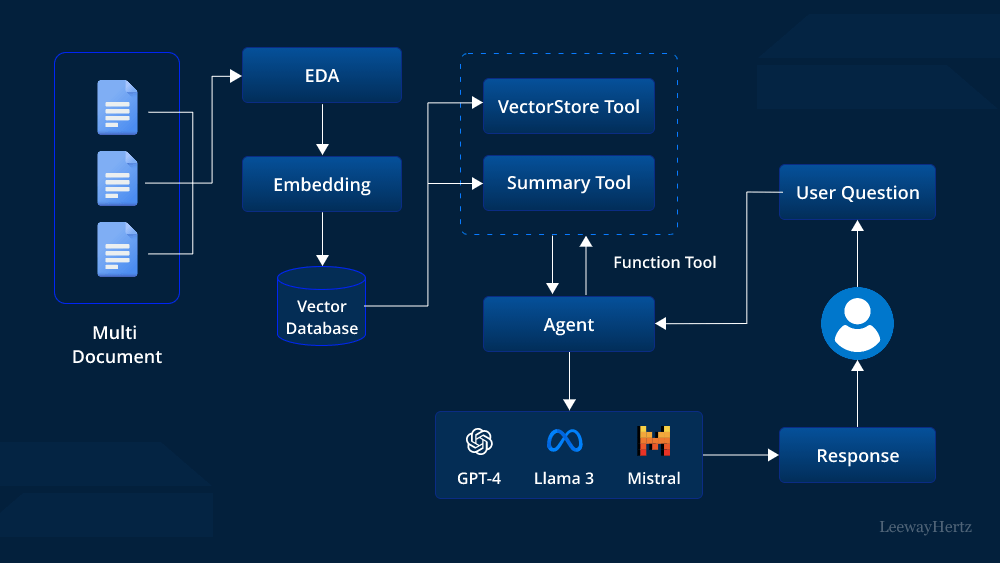
Agentic RAG is an advanced AI model that merges retrieval and generation capabilities to produce more accurate and relevant outputs. In simple terms, it allows AI models to not only generate responses based on training data but also actively retrieve information from external sources, such as databases or the internet, to enhance the quality of the generated content. This dual functionality makes Agentic RAG more dynamic and adaptable compared to traditional AI models that rely solely on their training data.
The concept of Agentic RAG revolves around creating AI agents that can autonomously seek out relevant information and integrate it into their responses. This approach is particularly useful in scenarios where the AI needs to provide up-to-date information or handle complex queries that require knowledge beyond its training set.
Types of Agentic RAG
Agentic RAG can be categorized into different types based on the retrieval and generation mechanisms used. Here are some of the key types:
- Simple Retrieval-Augmented Generation: This type of Agentic RAG uses a straightforward retrieval mechanism to fetch relevant information from a pre-defined dataset. It then combines this data with its generative model to produce responses. This approach is efficient for tasks with a limited scope of information sources.
- Dynamic Retrieval-Augmented Generation: In this type, the retrieval process is more dynamic and can access a wider range of sources, including real-time data from the web. The AI agent actively searches for the most relevant and up-to-date information, making it suitable for applications that require current knowledge, such as news aggregation or market analysis.
- Multimodal Retrieval-Augmented Generation: This type integrates multiple modes of data, such as text, images, and videos, into the retrieval and generation process. It is highly effective in scenarios where the AI needs to understand and generate responses across different media, such as virtual assistants or customer support bots that handle both text and visual inputs.
Applications of Agentic RAG
Agentic RAG has a wide range of applications across various industries, owing to its ability to enhance AI systems with real-time, relevant information retrieval. Some notable applications include:
- Customer Support: Agentic RAG can be used in customer support systems to provide accurate and timely responses by retrieving the latest information from databases or knowledge bases. This makes the support more effective and personalized, improving customer satisfaction.
- Content Creation: In content generation, such as writing articles, creating reports, or generating marketing materials, Agentic RAG can pull in relevant data and facts from external sources, ensuring that the content is both current and factually accurate.
- Virtual Assistants: Virtual assistants powered by Agentic RAG can offer more comprehensive and context-aware assistance by actively seeking information beyond their programmed knowledge. This capability is essential for tasks like scheduling, providing recommendations, or answering complex queries.
- Education and Training: In educational platforms, Agentic RAG can personalize learning by retrieving the most relevant content for each student, enhancing the overall learning experience. It can also generate quizzes, explanations, and other learning materials based on the latest curriculum and resources.
Implementation of Agentic RAG
Implementing Agentic RAG involves several key steps, each crucial to building a functional and efficient system:
- Data Integration: The first step in implementing Agentic RAG is integrating the AI model with external data sources. This could include databases, APIs, or web scraping tools that the model will use to retrieve information. Ensuring the data sources are reliable and up-to-date is crucial for the system’s performance.
- Model Training: The generative model must be trained on a comprehensive dataset that covers the scope of expected queries. Fine-tuning the model with retrieval-augmented datasets helps in aligning the generation process with the retrieved data, resulting in more accurate outputs.
- Retrieval Mechanism Setup: Developing a robust retrieval mechanism is essential for Agentic RAG. This includes setting up search algorithms, relevance scoring, and filtering processes to ensure that the information fetched is pertinent and of high quality.
- Testing and Optimization: Once the system is set up, thorough testing is required to identify and address any performance issues. Continuous optimization, such as refining retrieval algorithms or updating the generative model, is necessary to maintain the effectiveness of the Agentic RAG.
- Deployment and Monitoring: Deploying the Agentic RAG system involves integrating it with the end-user applications and setting up monitoring tools to track its performance. Regular updates and feedback loops help in keeping the system aligned with changing user needs and information landscapes.
Conclusion
Agentic RAG is revolutionizing the way AI models interact with information, enabling them to deliver more relevant, accurate, and context-aware outputs. By understanding its types, applications, and implementation process, businesses and developers can leverage Agentic RAG to enhance their AI solutions, making them more adaptive and effective in handling real-world tasks. As AI continues to evolve, Agentic RAG will play a pivotal role in pushing the boundaries of what AI systems can achieve.
 New Tech news
Leave a comment