In recent years, the insurance industry has been undergoing significant changes driven by advancements in technology. One of the most promising innovations is generative AI. This technology is transforming how insurance companies operate, interact with customers, and manage risks. In this article, we will explore the role of generative AI in insurance, its benefits, and the future prospects of this technology.
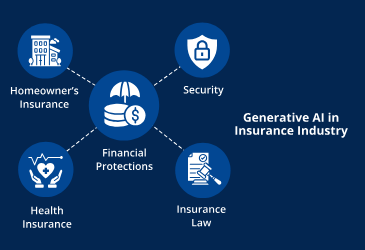
Understanding Generative AI in Insurance
Generative AI refers to a subset of artificial intelligence that involves creating new content based on existing data. Unlike traditional AI that performs tasks based on predefined rules, generative AI can produce novel and unique outputs. In the insurance sector, this technology is used to enhance various aspects of operations, from underwriting to customer service.
Generative AI in insurance involves training models on vast amounts of data, allowing them to generate predictions, simulate scenarios, and automate processes. This capability can lead to more accurate risk assessments, personalized policy recommendations, and efficient claims management.
Enhanced Risk Assessment and Underwriting
One of the primary applications of generative AI in insurance is risk assessment and underwriting. Traditionally, underwriting involves evaluating numerous factors to determine the risk associated with insuring an individual or asset. This process can be time-consuming and prone to human error.
Generative AI streamlines this process by analyzing large datasets to identify patterns and trends that might not be apparent to human underwriters. For example, generative AI can analyze historical claims data, social media activity, and other relevant information to assess risk more accurately. This allows insurers to make more informed decisions, set appropriate premiums, and reduce the likelihood of unexpected losses.
Personalized Customer Experiences
Another significant benefit of generative AI in insurance is its ability to enhance customer experiences. Insurance companies have traditionally struggled with providing personalized services due to the complexity and volume of data involved.
Generative AI can analyze individual customer data to generate personalized policy recommendations and tailor communications. For instance, if a customer frequently travels for work, the AI can suggest travel insurance options that best fit their needs. This level of personalization improves customer satisfaction and increases the likelihood of retaining clients.
Additionally, generative AI can create customized marketing materials and policy documents based on customer profiles. This not only saves time for insurance companies but also ensures that clients receive information that is relevant and engaging.
Streamlining Claims Management
Claims management is a critical area where generative AI is making a significant impact. The traditional claims process often involves manual review and handling, which can be slow and prone to errors.
Generative AI can automate many aspects of claims management, such as processing and validating claims. By analyzing historical claims data and current claim submissions, AI models can identify patterns and anomalies that might indicate fraudulent activity. This helps in speeding up legitimate claims and minimizing the risk of fraudulent ones.
Moreover, generative AI can generate automated responses to common claims inquiries, reducing the workload on customer service representatives. This not only improves efficiency but also enhances the overall customer experience by providing faster responses and resolutions.
Enhancing Fraud Detection
Fraud detection is another area where generative AI in insurance is proving valuable. Insurance fraud is a significant concern for the industry, leading to substantial financial losses. Detecting fraudulent claims requires analyzing large volumes of data and identifying suspicious patterns.
Generative AI can enhance fraud detection by analyzing various data points, including claim history, customer behavior, and external data sources. By generating predictive models and identifying anomalies, AI can help insurance companies detect potential fraud more effectively. This proactive approach to fraud detection reduces the financial impact of fraudulent claims and protects the integrity of the insurance system.
The Future of Generative AI in Insurance
The future of generative AI in insurance looks promising, with ongoing advancements in technology likely to bring further improvements to the industry. As AI models continue to evolve, they will become more adept at understanding complex data and generating valuable insights.
One potential development is the integration of generative AI with other emerging technologies, such as blockchain and the Internet of Things (IoT). Combining these technologies could lead to even more efficient and secure insurance processes, enhancing both risk management and customer experiences.
Additionally, as generative AI becomes more sophisticated, it may enable insurance companies to offer innovative products and services. For example, AI-generated simulations could help insurers develop new types of coverage or create tailored insurance solutions for niche markets.
Conclusion
Generative AI in insurance is revolutionizing the industry by enhancing risk assessment, personalizing customer experiences, streamlining claims management, and improving fraud detection. As technology continues to advance, the impact of generative AI is likely to grow, bringing new opportunities and challenges to the insurance sector. Embracing these innovations will be crucial for insurance companies looking to stay competitive and provide better services to their clients. The future of insurance is being shaped by generative AI, and its potential is boundless.
 New Tech news
Leave a comment