In today’s rapidly evolving business landscape, the integration of Artificial Intelligence (AI) has become instrumental in streamlining operations and enhancing efficiency across various industries. One of the most impactful applications of AI is in business process automation, where sophisticated algorithms and machine learning capabilities are leveraged to optimize workflows, reduce costs, and improve decision-making processes. This article explores how AI is reshaping business operations through automation, highlighting key benefits, challenges, and future trends.
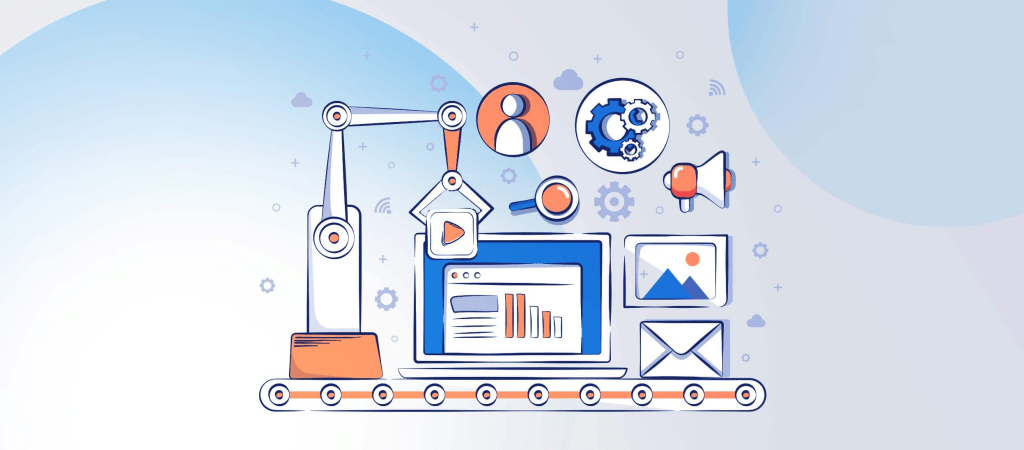
Understanding AI in Business Process Automation
AI in business process automation refers to the use of AI technologies such as machine learning, natural language processing (NLP), and robotic process automation (RPA) to automate repetitive tasks and optimize complex workflows within organizations. By deploying AI-driven solutions, businesses can achieve higher levels of operational efficiency, accuracy, and scalability.
Benefits of AI in Business Process Automation
- Improved Efficiency and Productivity:
AI-powered automation reduces the need for manual intervention in routine tasks, allowing employees to focus on more strategic activities. This leads to increased productivity and faster turnaround times for business processes. - Enhanced Decision Making:
AI algorithms analyze large volumes of data quickly and accurately, providing valuable insights that support better decision-making. This capability is particularly beneficial in industries such as finance, healthcare, and manufacturing, where data-driven decisions can have a significant impact on business outcomes. - Cost Savings:
Automation reduces operational costs by minimizing errors, optimizing resource allocation, and reducing the dependency on human labor for repetitive tasks. Over time, this can lead to substantial savings for businesses of all sizes. - Scalability:
AI-driven automation solutions are easily scalable, allowing businesses to handle increased workloads without proportionally increasing their workforce. This scalability is crucial for organizations experiencing growth or fluctuations in demand.
Challenges in Implementing AI in Business Process Automation
Despite its numerous benefits, integrating AI into business process automation poses several challenges:
- Initial Investment and Infrastructure:
Implementing AI technologies requires significant initial investment in infrastructure, software development, and training. Small and medium-sized enterprises (SMEs) may find it challenging to allocate resources for AI adoption. - Data Quality and Integration:
AI algorithms heavily rely on high-quality data for accurate decision-making. Ensuring data integrity, accessibility, and integration across different systems can be a complex task, especially in organizations with legacy IT systems. - Change Management and Workforce Adaptation:
Automation often necessitates changes in workflows and job roles, which can lead to resistance among employees. Effective change management strategies and workforce training programs are essential for successful AI adoption. - Ethical and Regulatory Considerations:
AI applications must adhere to ethical standards and regulatory requirements concerning data privacy, security, and transparency. Ensuring compliance with these standards is crucial to maintaining trust and credibility.
Future Trends in AI-driven Business Process Automation
Looking ahead, several trends are shaping the future of AI in business process automation:
- Advanced Cognitive Automation:
AI technologies are evolving to incorporate advanced cognitive capabilities such as autonomous decision-making, natural language understanding, and predictive analytics. These advancements will enable more complex and intelligent automation solutions. - AI-powered Customer Interaction:
Chatbots and virtual assistants powered by AI are transforming customer service and support functions. These intelligent systems can handle inquiries, provide personalized recommendations, and improve overall customer experience. - Integration with Internet of Things (IoT):
AI-enabled automation systems are increasingly integrated with IoT devices to gather real-time data and automate processes in industrial settings, smart cities, and healthcare environments. - Edge Computing and AI:
Edge computing technologies are enhancing AI capabilities by enabling real-time data processing and decision-making at the network edge. This approach reduces latency and enhances the responsiveness of AI-driven automation systems.
Conclusion
AI in business process automation represents a paradigm shift in how organizations operate, offering unprecedented opportunities to streamline operations, improve decision-making, and achieve significant cost savings. While challenges such as initial investment, data integration, and workforce adaptation exist, the benefits far outweigh these obstacles. As AI technologies continue to evolve, businesses that embrace automation will be better positioned to thrive in a competitive global economy, driving innovation and delivering superior value to customers.
In summary, AI is not just transforming business processes; it is revolutionizing the way businesses operate, innovate, and grow. Embracing AI-driven automation is no longer a choice but a strategic imperative for organizations seeking to maintain a competitive edge in today’s digital age.
 New Tech news
Leave a comment