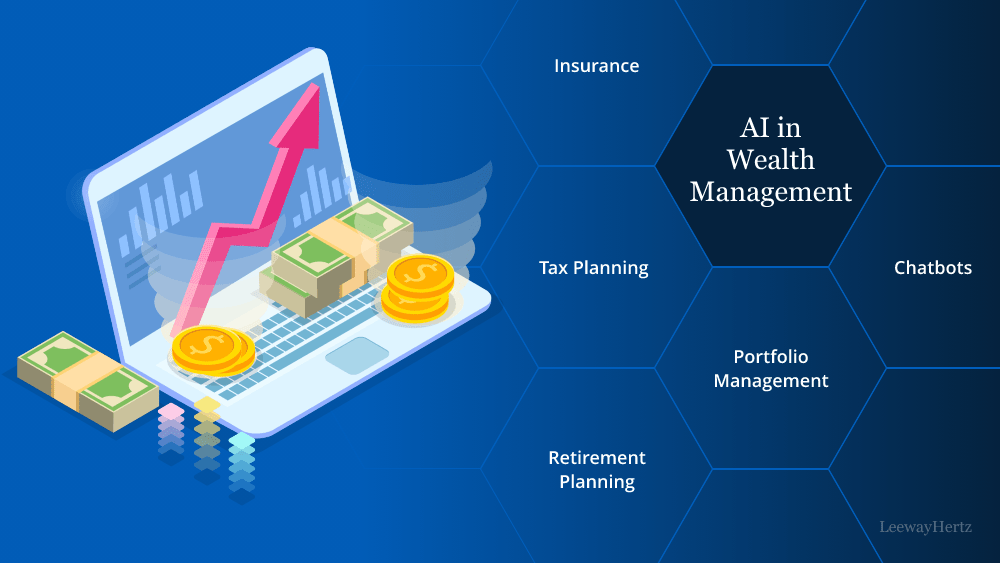
Artificial Intelligence (AI) is revolutionizing various sectors, and wealth management is no exception. The integration of AI in wealth management is reshaping how financial advisors operate, making the process more efficient, personalized, and data-driven. This article explores the impact of AI in wealth management, highlighting its benefits and potential challenges.
Enhancing Personalization and Client Experience
Tailored Investment Strategies
One of the most significant advantages of AI in wealth management is its ability to create highly personalized investment strategies. AI algorithms analyze vast amounts of data, including market trends, economic indicators, and individual client preferences, to generate tailored investment recommendations. This personalized approach ensures that clients receive advice that aligns with their financial goals and risk tolerance.
Improved Client Interaction
AI-powered chatbots and virtual assistants are becoming increasingly popular in the wealth management industry. These tools provide clients with instant access to information and support, enhancing their overall experience. Clients can ask questions, request portfolio updates, or even execute trades, all through a user-friendly interface. This 24/7 availability ensures that clients receive timely assistance, leading to higher satisfaction and engagement.
Data-Driven Decision Making
Advanced Analytics
AI in wealth management leverages advanced analytics to process and interpret large datasets. This capability allows financial advisors to identify trends and patterns that may not be apparent through traditional analysis methods. By using AI, advisors can make more informed decisions, ultimately leading to better investment outcomes for their clients.
Predictive Modeling
Predictive modeling is another powerful application of AI in wealth management. AI algorithms can forecast market movements and economic conditions with a high degree of accuracy. This predictive power enables advisors to anticipate potential risks and opportunities, allowing them to adjust their strategies proactively. As a result, clients can benefit from more robust and resilient investment portfolios.
Risk Management and Compliance
Automated Risk Assessment
Managing risk is a critical aspect of wealth management. AI enhances this process by automating risk assessment and monitoring. AI systems continuously analyze market data and client portfolios to detect potential risks. When a risk is identified, the system can alert the advisor, enabling them to take swift action to mitigate it. This proactive approach helps protect client investments and maintain portfolio stability.
Regulatory Compliance
The financial industry is heavily regulated, and compliance is a significant concern for wealth managers. AI can simplify compliance by automating the monitoring and reporting of regulatory requirements. AI systems can track changes in regulations, ensure that portfolios adhere to legal guidelines, and generate necessary reports. This automation reduces the administrative burden on advisors and minimizes the risk of non-compliance.
Efficiency and Cost Reduction
Streamlined Operations
AI in wealth management streamlines various operational processes, leading to increased efficiency. Tasks such as data entry, portfolio rebalancing, and transaction processing can be automated using AI, reducing the time and effort required from human advisors. This automation allows advisors to focus more on strategic decision-making and client relationships, enhancing the overall quality of service.
Cost Savings
The efficiency gains from AI integration also translate into cost savings for wealth management firms. By automating routine tasks, firms can reduce labor costs and improve operational margins. Additionally, AI-powered tools can perform complex analyses quickly and accurately, reducing the need for expensive external research services. These cost savings can be passed on to clients in the form of lower fees, making wealth management services more accessible.
Challenges and Considerations
Data Security and Privacy
While AI offers numerous benefits, it also raises concerns about data security and privacy. Wealth management firms must ensure that client data is protected from cyber threats and unauthorized access. Implementing robust cybersecurity measures and complying with data protection regulations are essential to maintaining client trust.
Ethical Considerations
AI in wealth management also brings ethical considerations to the forefront. The use of AI algorithms must be transparent, and clients should be informed about how their data is used. Additionally, firms must ensure that AI-driven decisions are free from bias and do not disadvantage any client group. Upholding ethical standards is crucial for maintaining the integrity of the wealth management industry.
The Future of AI in Wealth Management
The future of AI in wealth management looks promising, with continued advancements expected to further transform the industry. As AI technology evolves, it will enable even more sophisticated analysis and decision-making capabilities. Wealth management firms that embrace AI will be better positioned to meet the changing needs of their clients and stay competitive in an increasingly digital landscape.
Continuous Innovation
To stay ahead, wealth management firms must commit to continuous innovation. This involves investing in AI research and development, adopting new technologies, and training staff to effectively use AI tools. By fostering a culture of innovation, firms can harness the full potential of AI and deliver superior value to their clients.
Collaboration Between Humans and AI
The successful integration of AI in wealth management requires a collaborative approach. While AI can handle data processing and analysis, human advisors bring essential skills such as empathy, judgment, and personalized client interaction. By combining the strengths of both AI and human expertise, wealth management firms can offer a more comprehensive and effective service.
In conclusion, AI in wealth management is transforming the industry by enhancing personalization, enabling data-driven decisions, improving risk management, and reducing costs. However, it also presents challenges that must be carefully managed. As the technology continues to advance, the collaboration between AI and human advisors will be key to unlocking its full potential and delivering exceptional client outcomes.
 New Tech news
Leave a comment