Artificial Intelligence (AI) has been making significant strides across various industries, and healthcare is no exception. AI agents for healthcare are transforming the way we diagnose, treat, and manage diseases, offering the potential for more efficient, accurate, and personalized care.
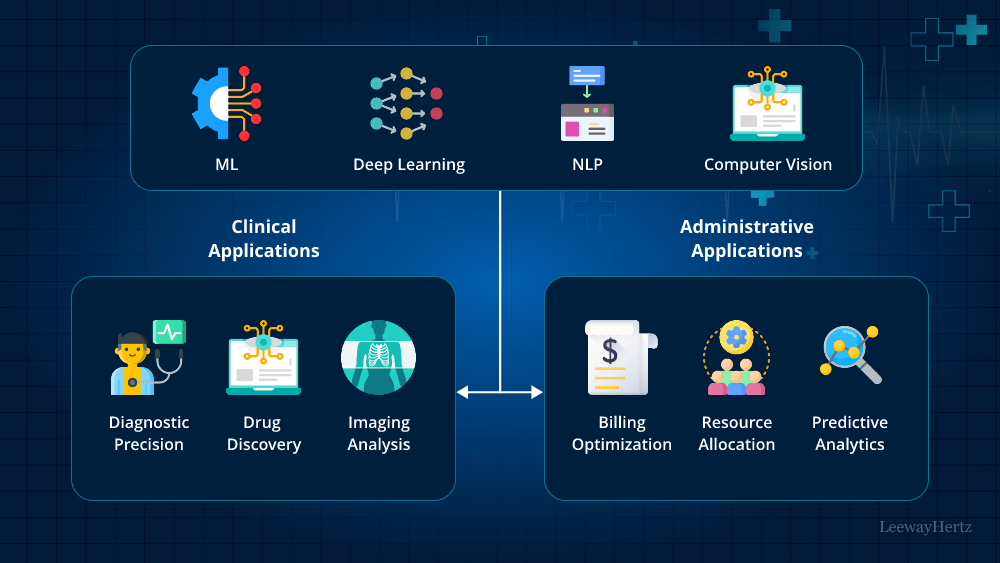
The Role of AI Agents in Healthcare
AI agents, often referred to as intelligent agents, are software programs that can perform tasks autonomously. In healthcare, these agents can analyze vast amounts of data, recognize patterns, and make decisions with minimal human intervention. Their applications range from administrative support to direct patient care.
Enhancing Diagnostic Accuracy
One of the most promising uses of AI agents in healthcare is in the field of diagnostics. AI algorithms can analyze medical images such as X-rays, CT scans, and MRIs with remarkable precision. For instance, AI agents have shown proficiency in detecting abnormalities in mammograms and identifying early signs of conditions like breast cancer. These agents can process images faster than human radiologists and often with greater accuracy, leading to earlier and more accurate diagnoses.
Moreover, AI agents can analyze electronic health records (EHRs) to identify patterns that might be missed by human doctors. By examining large datasets, AI can uncover correlations between symptoms, medical history, and genetic information, assisting in diagnosing complex diseases.
Personalized Treatment Plans
AI agents for healthcare are also pivotal in creating personalized treatment plans. Traditional treatment methods often follow a one-size-fits-all approach, but AI can tailor treatments to individual patients. By analyzing a patient’s genetic makeup, lifestyle, and response to previous treatments, AI can recommend therapies that are more likely to be effective.
For example, in oncology, AI agents can predict how a patient will respond to certain chemotherapy drugs based on their genetic profile. This allows doctors to choose the most suitable treatment, minimizing adverse effects and improving outcomes.
Streamlining Administrative Tasks
Healthcare professionals often spend a significant amount of time on administrative tasks, such as scheduling appointments, managing patient records, and processing insurance claims. AI agents can automate many of these tasks, freeing up time for doctors and nurses to focus on patient care.
Virtual assistants powered by AI can handle appointment bookings, reminders, and even initial patient inquiries. These assistants can provide patients with timely information and ensure that they are seen promptly, improving the overall efficiency of healthcare delivery.
Improving Patient Monitoring and Follow-Up
AI agents for healthcare are also enhancing patient monitoring and follow-up care. Wearable devices equipped with AI can continuously monitor vital signs such as heart rate, blood pressure, and glucose levels. These devices can detect anomalies in real time and alert healthcare providers if there is a cause for concern.
In chronic disease management, AI agents can track a patient’s condition over time and provide personalized recommendations. For example, AI can analyze data from a diabetic patient’s glucose monitor and suggest adjustments to their diet or medication. This proactive approach helps in managing conditions more effectively and prevents complications.
Reducing Healthcare Costs
The implementation of AI agents in healthcare can lead to significant cost savings. By improving diagnostic accuracy and enabling early intervention, AI can reduce the need for expensive treatments and hospitalizations. Additionally, automating administrative tasks can lower operational costs for healthcare facilities.
AI-driven predictive analytics can also help in resource management. For instance, AI can forecast patient admissions and optimize staff schedules, ensuring that healthcare providers are adequately prepared to meet patient demand without overstaffing.
The Future of AI Agents in Healthcare
The future of AI agents in healthcare looks promising. As technology continues to advance, AI will become even more integrated into healthcare systems, leading to more sophisticated and accurate applications. The collaboration between AI and healthcare professionals will likely result in improved patient outcomes, more efficient care delivery, and a more personalized approach to treatment.
In conclusion, AI agents for healthcare are revolutionizing the medical field by enhancing diagnostic accuracy, personalizing treatment plans, streamlining administrative tasks, improving patient monitoring, and reducing costs. While challenges remain, the potential benefits of AI in healthcare are immense, promising a future where technology and human expertise work hand in hand to provide the best possible care.
 New Tech news
Leave a comment