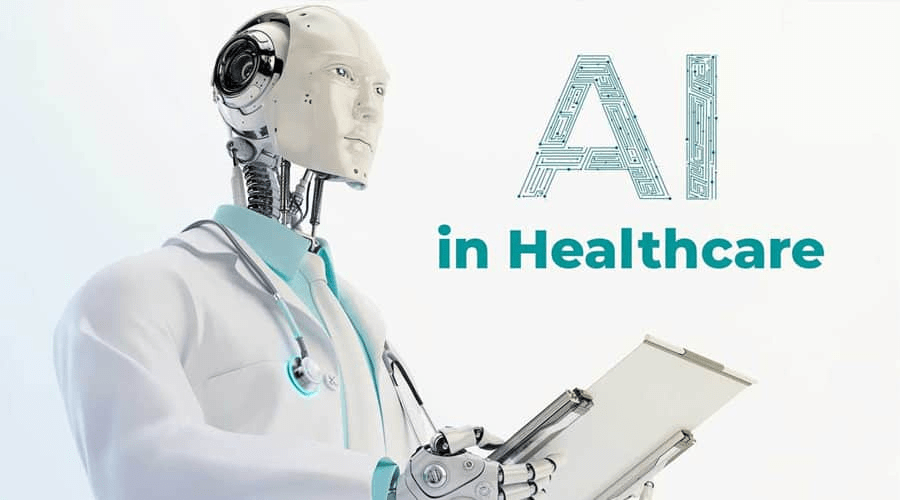
Artificial Intelligence (AI) in healthcare is transforming the landscape of medicine, offering innovative solutions for patient care, diagnostics, and operational efficiency. This technology is poised to revolutionize healthcare by providing faster, more accurate, and personalized medical services. This article explores the various ways AI is integrated into healthcare, its benefits, challenges, and future potential.
Understanding AI in Healthcare
Artificial Intelligence refers to the simulation of human intelligence in machines that are programmed to think and learn. In healthcare, AI systems can analyze complex medical data, assist in clinical decision-making, and enhance patient outcomes. These systems include machine learning algorithms, natural language processing (NLP), and robotics, all designed to perform tasks that typically require human intelligence.
Key Applications of AI in Healthcare
- Medical Imaging and Diagnostics One of the most promising applications of AI in healthcare is in the field of medical imaging and diagnostics. AI algorithms can analyze medical images such as X-rays, MRIs, and CT scans with a high degree of accuracy. For instance, AI systems can detect anomalies and diagnose diseases such as cancer at an early stage, often with greater precision than human radiologists. This capability significantly improves early diagnosis and treatment outcomes.
- Predictive Analytics and Risk Assessment AI in healthcare also plays a critical role in predictive analytics. By analyzing large datasets, AI can predict disease outbreaks, patient readmissions, and potential complications. Predictive analytics enable healthcare providers to identify high-risk patients and intervene early, thereby reducing hospital admissions and improving patient care.
- Personalized Medicine Personalized medicine is another area where AI is making a substantial impact. AI can analyze a patient’s genetic makeup, lifestyle, and environment to recommend personalized treatment plans. This approach ensures that patients receive treatments tailored to their unique needs, enhancing the efficacy of interventions and minimizing side effects.
- Virtual Health Assistants and Chatbots Virtual health assistants and AI-powered chatbots are becoming increasingly popular in healthcare. These tools provide patients with immediate access to medical information, symptom checking, and appointment scheduling. They can also remind patients to take their medications and follow their treatment plans, thus improving adherence and health outcomes.
- Robotics and Automation In surgical procedures, AI-powered robots assist surgeons in performing precise and minimally invasive operations. These robots offer enhanced dexterity, stability, and visualization, leading to reduced recovery times and improved surgical outcomes. Additionally, AI-driven automation streamlines administrative tasks such as billing, patient record management, and appointment scheduling, thereby increasing operational efficiency in healthcare facilities.
Benefits of AI in Healthcare
The integration of AI in healthcare offers numerous benefits:
- Improved Accuracy and Efficiency: AI systems can process vast amounts of data quickly and accurately, reducing human error and enhancing diagnostic precision.
- Cost Reduction: By automating routine tasks and optimizing resource allocation, AI helps reduce operational costs in healthcare facilities.
- Enhanced Patient Care: AI enables personalized treatment plans, early disease detection, and continuous patient monitoring, leading to better health outcomes.
- Increased Accessibility: Telemedicine and AI-driven tools make healthcare more accessible, particularly in remote or underserved areas.
Challenges and Considerations
Despite its potential, the adoption of AI in healthcare faces several challenges:
- Data Privacy and Security: Ensuring the privacy and security of patient data is paramount. AI systems require access to vast amounts of sensitive data, which necessitates robust data protection measures.
- Regulatory Compliance: The healthcare industry is highly regulated, and AI applications must comply with stringent regulatory standards to ensure patient safety and efficacy.
- Ethical Concerns: The use of AI in healthcare raises ethical issues, such as bias in AI algorithms and the potential for reduced human oversight in medical decision-making.
- Integration with Existing Systems: Integrating AI technologies with existing healthcare systems and workflows can be complex and requires significant investment in infrastructure and training.
The Future of AI in Healthcare
The future of AI in healthcare is bright, with ongoing advancements promising even greater innovations. Future developments may include:
- Advanced Genomics: AI will continue to play a crucial role in genomics, helping to identify genetic markers for diseases and develop targeted therapies.
- Enhanced Drug Discovery: AI algorithms can accelerate the drug discovery process by predicting molecular behavior and identifying potential drug candidates more efficiently.
- Remote Monitoring and Telehealth: AI-powered remote monitoring devices and telehealth platforms will enable continuous patient monitoring and real-time health assessments.
- Collaborative AI Systems: AI systems will increasingly work alongside healthcare professionals, augmenting their capabilities and improving collaborative decision-making.
Conclusion
AI in healthcare is not just a technological advancement; it is a paradigm shift that holds the promise of transforming patient care and medical operations. As AI continues to evolve, it will bring about more personalized, efficient, and accessible healthcare solutions, ultimately enhancing the quality of life for patients worldwide. Embracing these innovations while addressing the associated challenges will be key to unlocking the full potential of AI in healthcare.
 New Tech news
Leave a comment