Introduction
In today’s rapidly evolving business landscape, enterprises are increasingly turning to artificial intelligence (AI) to enhance operational efficiency and improve decision-making processes. One of the most promising applications of AI in business is the development of AI copilots—intelligent systems that assist human operators in complex tasks, from data analysis to customer interactions. This article explores the key steps and considerations involved in building an AI copilot tailored for enterprise needs.
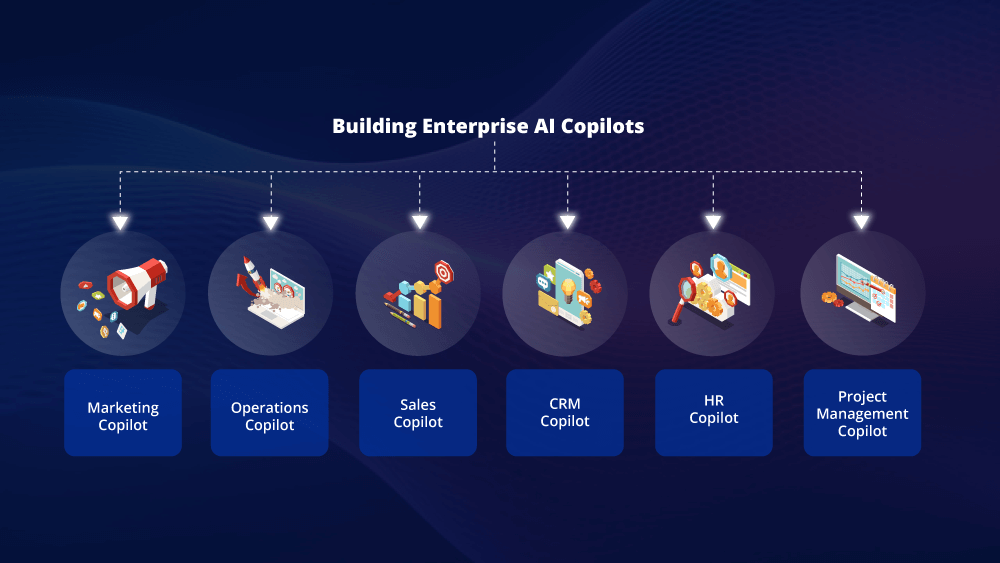
Understanding the Concept of an AI Copilot
An AI copilot in the context of enterprises is a sophisticated AI system designed to work alongside human employees, providing real-time insights, automating routine tasks, and augmenting decision-making capabilities across various departments. Unlike fully autonomous systems, AI copilots are meant to collaborate with human experts rather than replace them.
Identifying Business Needs and Objectives
Before embarking on the development of an AI copilot, it’s crucial for enterprises to clearly define their specific business needs and objectives. This involves conducting a thorough assessment of existing workflows, identifying pain points, and determining how AI can add value. For instance, a company may seek to streamline customer support processes, optimize supply chain management, or enhance predictive analytics for marketing strategies.
Data Collection and Preparation
Data forms the backbone of any AI system, including copilots. Enterprises need to gather relevant data from internal and, potentially, external sources. This data could include customer interactions, operational metrics, financial records, and more. It’s essential to ensure data quality, consistency, and relevance to train the AI copilot effectively.
Choosing the Right AI Technologies and Frameworks
Selecting appropriate AI technologies and frameworks is critical to the success of building an AI copilot. Depending on the specific use case, enterprises may leverage machine learning algorithms for predictive analytics, natural language processing (NLP) for customer service applications, computer vision for visual data analysis, or a combination thereof. Cloud-based AI platforms and open-source tools can provide scalable and cost-effective solutions.
Building and Training the AI Model
The development phase involves building and training the AI copilot model using the collected data. This process typically includes data preprocessing, feature engineering, model selection, and iterative training cycles. Supervised learning techniques may be employed for tasks such as classification and regression, while unsupervised learning can uncover hidden patterns within data.
Integration with Existing Systems
Successful deployment of an AI copilot requires seamless integration with existing enterprise systems and workflows. This involves collaboration between AI developers, IT teams, and domain experts to ensure compatibility, security, and minimal disruption. APIs (Application Programming Interfaces) and middleware play a crucial role in facilitating data exchange and communication between the AI copilot and other applications.
Testing and Validation
Thorough testing and validation are essential to verify the performance, reliability, and accuracy of the AI copilot before deployment. Testing scenarios should simulate real-world conditions and edge cases to identify potential issues and refine the AI model accordingly. Validation involves comparing AI-generated outputs against established benchmarks or human expert judgments.
Deployment and Monitoring
Once validated, the AI copilot can be deployed in a phased manner across the enterprise. Continuous monitoring is crucial post-deployment to assess performance metrics, gather user feedback, and make iterative improvements. Monitoring tools and analytics dashboards can provide insights into AI copilot utilization, efficiency gains, and ROI (Return on Investment).
Ensuring Ethical and Regulatory Compliance
Ethical considerations and regulatory compliance must be integrated into the development and deployment of AI copilots. Enterprises should prioritize transparency, fairness, and accountability in AI decision-making processes, ensuring compliance with data privacy laws and industry regulations. Establishing clear guidelines for AI usage and addressing potential biases are critical steps in building trust and acceptance among stakeholders.
Future Outlook and Scalability
As AI technology continues to evolve, the future of AI copilots in enterprises looks promising. Advancements in AI algorithms, robotics, and IoT (Internet of Things) integration are expected to further enhance the capabilities and versatility of AI copilots across diverse industries. Enterprises should plan for scalability and agility in their AI strategies to stay competitive in an increasingly digital economy.
Conclusion
Building an AI copilot for enterprises involves a systematic approach, starting from identifying business needs to deployment and beyond. By harnessing the power of AI technologies effectively, enterprises can unlock new opportunities for efficiency, innovation, and informed decision-making. As organizations embrace AI copilots as strategic assets, collaboration between humans and machines will redefine the future of work and enterprise operations.
Read More: https://www.leewayhertz.com/how-to-build-an-ai-copilot/
 New Tech news
Leave a comment