Introduction
Artificial Intelligence (AI) is revolutionizing many aspects of our lives, from healthcare to finance, and one of its most profound impacts is in the realm of decision making. AI in decision making involves the use of machine learning algorithms, data analytics, and automation to enhance and support human choices. This article explores how AI is reshaping decision-making processes across various sectors, the benefits and challenges it presents, and what the future might hold.
Understanding AI in Decision Making
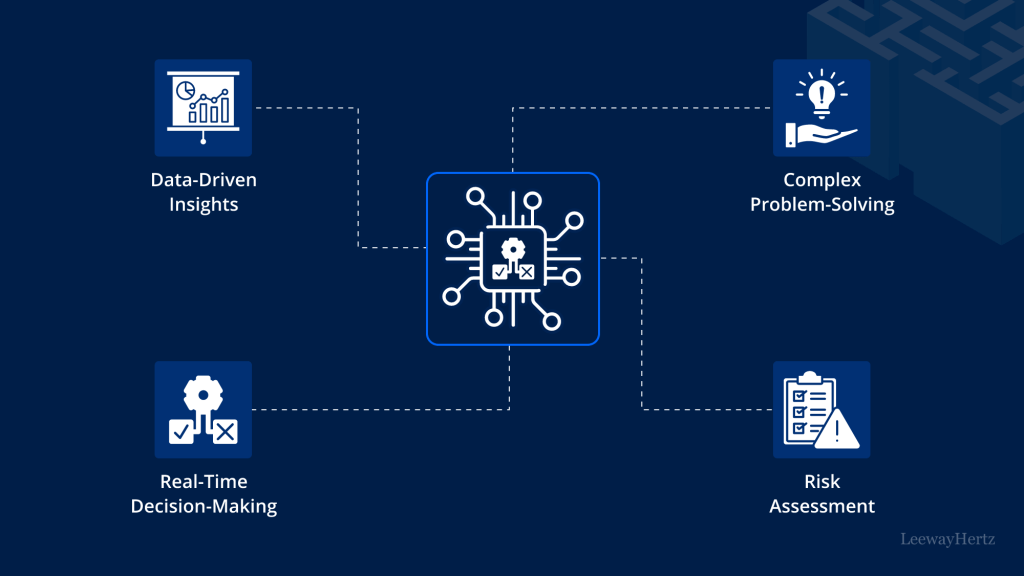
AI in decision making refers to systems that assist or replace human decision-making tasks using data-driven insights and predictive models. These systems can analyze vast amounts of data far quicker than humans, identify patterns, and make recommendations or decisions based on that analysis.
Types of AI in Decision Making
- Automated Decision Systems: These systems can make decisions without human intervention. They are commonly used in areas like financial trading, where split-second decisions are crucial.
- Decision Support Systems: These assist humans in making decisions by providing relevant information and analysis. For instance, in healthcare, AI can suggest treatment plans based on patient data and medical research.
- Augmented Decision Systems: These combine human intuition with AI analysis, enhancing the decision-making process. An example is in customer service, where AI can analyze customer data to suggest the best responses, which are then evaluated by human agents.
Benefits of AI in Decision Making
Speed and Efficiency
One of the most significant advantages of AI in decision making is its ability to process and analyze data rapidly. This speed is crucial in industries like finance and healthcare, where timely decisions can have significant impacts.
Improved Accuracy
AI systems can reduce human error by providing consistent, data-driven recommendations. For example, in medical diagnostics, AI can help in accurately identifying diseases from medical imaging, leading to better patient outcomes.
Handling Complexity
AI can manage and make sense of complex data sets that would be overwhelming for humans. In logistics, AI can optimize supply chain operations by considering numerous variables, from weather patterns to market demand.
Cost Reduction
By automating routine decision-making tasks, AI can significantly reduce operational costs. In customer service, AI chatbots handle a high volume of inquiries, freeing up human agents to deal with more complex issues.
Challenges of AI in Decision Making
Data Quality and Bias
AI systems rely on high-quality data to function effectively. Poor or biased data can lead to incorrect or unfair decisions. Ensuring data integrity and diversity is crucial to developing reliable AI decision-making systems.
Lack of Transparency
Many AI systems operate as “black boxes,” making decisions without providing clear explanations. This lack of transparency can be problematic in fields where understanding the decision-making process is essential, such as in legal or medical contexts.
Ethical and Legal Concerns
The use of AI in decision making raises various ethical and legal questions. For instance, who is responsible if an AI system makes a harmful decision? Addressing these concerns requires robust regulatory frameworks and ethical guidelines.
Dependence on Technology
Over-reliance on AI can lead to a loss of critical thinking and decision-making skills among humans. It’s essential to strike a balance where AI supports but does not entirely replace human judgment.
Applications of AI in Decision Making
Healthcare
In healthcare, AI is used for diagnostics, treatment recommendations, and predicting patient outcomes. AI systems can analyze medical images, genetic information, and electronic health records to assist doctors in making more accurate and personalized treatment plans.
Finance
AI in finance helps in risk assessment, fraud detection, and automated trading. Financial institutions use AI to analyze market trends, predict stock movements, and manage portfolios, leading to more informed investment decisions.
Retail
Retailers use AI to personalize customer experiences, manage inventory, and optimize pricing strategies. AI systems analyze consumer behavior and purchasing patterns to recommend products and create targeted marketing campaigns.
Manufacturing
In manufacturing, AI optimizes production processes, predicts equipment failures, and improves supply chain management. AI-driven predictive maintenance systems can foresee machinery breakdowns, reducing downtime and maintenance costs.
Transportation
AI in transportation enhances route planning, traffic management, and autonomous driving. AI systems analyze traffic data to suggest optimal routes, reducing travel time and fuel consumption. Autonomous vehicles rely on AI to make real-time driving decisions, increasing safety and efficiency.
The Future of AI in Decision Making
The future of AI in decision making promises even more integration and sophistication. As AI technology advances, we can expect more autonomous systems capable of making complex decisions. The development of explainable AI will also address transparency issues, making AI decisions easier to understand and trust.
Moreover, interdisciplinary collaboration will enhance AI’s capabilities, combining insights from fields like psychology, neuroscience, and ethics to create more holistic and human-centered AI systems.
Conclusion
AI in decision making is a transformative force that enhances speed, accuracy, and efficiency across various sectors. While it presents challenges such as data quality, transparency, and ethical concerns, the potential benefits are immense. As we continue to develop and refine AI technologies, their role in decision making will undoubtedly expand, paving the way for smarter, more informed choices in every aspect of our lives.
 New Tech news
Leave a comment