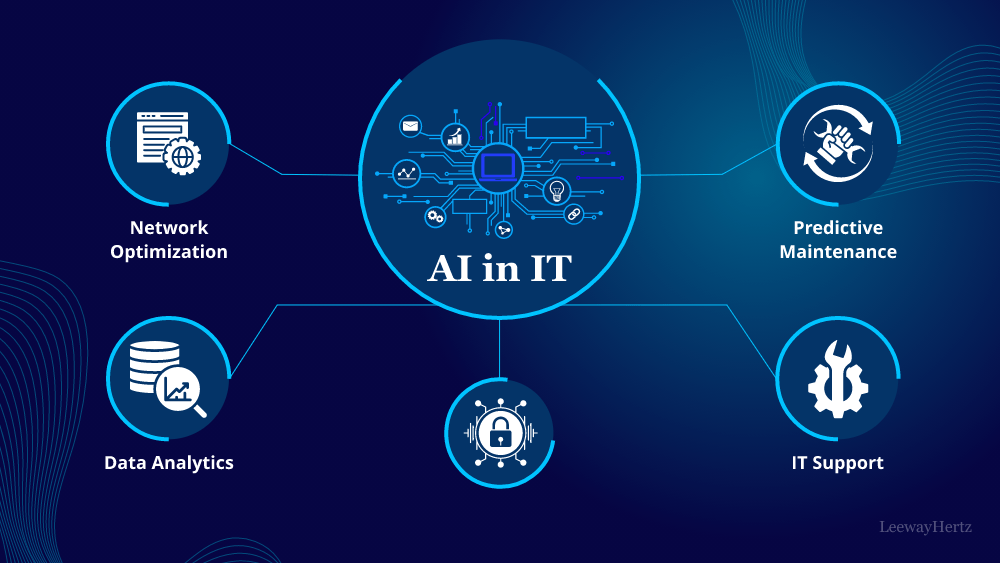
Artificial Intelligence (AI) has become a pivotal force in the realm of information technology (IT), reshaping how organizations operate, innovate, and compete. This article explores the multifaceted role of AI in IT, highlighting its applications, benefits, and the challenges it presents.
Introduction to AI in Information Technology
AI refers to the simulation of human intelligence in machines designed to think and act like humans. In the context of IT, AI encompasses a range of technologies including machine learning, natural language processing, and robotics, which are used to enhance and automate processes. The integration of AI in IT has led to the development of smarter systems capable of learning, adapting, and performing tasks that traditionally required human intelligence.
Key Applications of AI in Information Technology
Automation of Routine Tasks
One of the most significant impacts of AI in information technology is the automation of routine tasks. AI-powered systems can handle repetitive tasks such as data entry, system monitoring, and software updates, freeing up IT professionals to focus on more complex and strategic activities. For instance, AI-driven tools can automate the maintenance of servers and networks, significantly reducing downtime and improving efficiency.
Enhanced Cybersecurity
Cybersecurity is a critical area where AI is making substantial contributions. AI algorithms can analyze vast amounts of data to detect anomalies and potential security threats in real-time. Machine learning models can predict and respond to cyber attacks more quickly and accurately than traditional methods. Additionally, AI can enhance security protocols by continuously learning from new threats, thereby improving the overall resilience of IT infrastructures.
Improved Data Management and Analytics
AI technologies are revolutionizing data management and analytics. With the ability to process and analyze large datasets rapidly, AI tools help organizations gain valuable insights and make informed decisions. For example, AI can assist in identifying patterns and trends in data that would be impossible for humans to detect. This capability is particularly beneficial in fields such as finance, healthcare, and retail, where data-driven decisions are crucial.
Customer Support and Service
AI-powered chatbots and virtual assistants are transforming customer support in IT. These AI systems can handle a wide range of customer inquiries, provide instant responses, and offer personalized support around the clock. By integrating AI into customer service platforms, companies can improve customer satisfaction and reduce the workload on human support teams.
Benefits of AI in Information Technology
Increased Efficiency and Productivity
The automation of routine tasks and the enhancement of data analytics lead to significant improvements in efficiency and productivity. AI systems can perform tasks faster and with greater accuracy than humans, which reduces errors and operational costs. This increased efficiency allows businesses to scale their operations and deliver better services to their customers.
Enhanced Decision-Making
AI provides IT professionals with powerful tools to analyze data and generate actionable insights. This capability enhances decision-making processes, enabling organizations to respond more swiftly to market changes and emerging trends. AI-driven analytics also help businesses to optimize their operations, improve product offerings, and create more targeted marketing strategies.
Cost Reduction
Implementing AI in IT can lead to substantial cost savings. By automating tasks and improving operational efficiency, organizations can reduce their reliance on manual labor and decrease operational costs. Additionally, AI can help in identifying areas where resources are being wasted and suggest ways to optimize expenditure.
Challenges and Considerations
Data Privacy and Security
While AI offers numerous benefits, it also raises concerns about data privacy and security. The vast amounts of data required for AI systems to function effectively can be a target for cybercriminals. Ensuring that AI systems are secure and that data is protected is a significant challenge for IT professionals.
Ethical and Bias Issues
AI systems can inadvertently perpetuate biases present in the data they are trained on. Ensuring that AI technologies are developed and implemented ethically, without reinforcing existing prejudices, is crucial. Organizations must strive to create transparent AI systems that are fair and unbiased.
Skill Gaps and Training
The integration of AI in IT requires a workforce with specialized skills in AI and machine learning. There is a growing demand for professionals who can develop, implement, and manage AI systems. Bridging the skill gap through education and training is essential to fully leverage the potential of AI in information technology.
Conclusion
AI in information technology is not just a trend; it is a transformative force that is reshaping the industry. From automating routine tasks to enhancing cybersecurity and data analytics, AI is driving significant advancements and efficiencies. However, as with any powerful technology, it comes with its own set of challenges that need to be addressed. By navigating these challenges thoughtfully, organizations can harness the full potential of AI to drive innovation and growth in the IT sector.
 New Tech news
Leave a comment