Introduction:
In today’s digital age, Artificial Intelligence (AI) has become ubiquitous, revolutionizing various industries from healthcare to finance, and from education to entertainment. Building an AI app might seem like a daunting task, reserved only for tech wizards, but with the right guidance and tools, anyone can embark on this exciting journey. In this comprehensive guide, we’ll explore the step-by-step process of building an AI app, demystifying the complexities and empowering you to bring your innovative ideas to life.
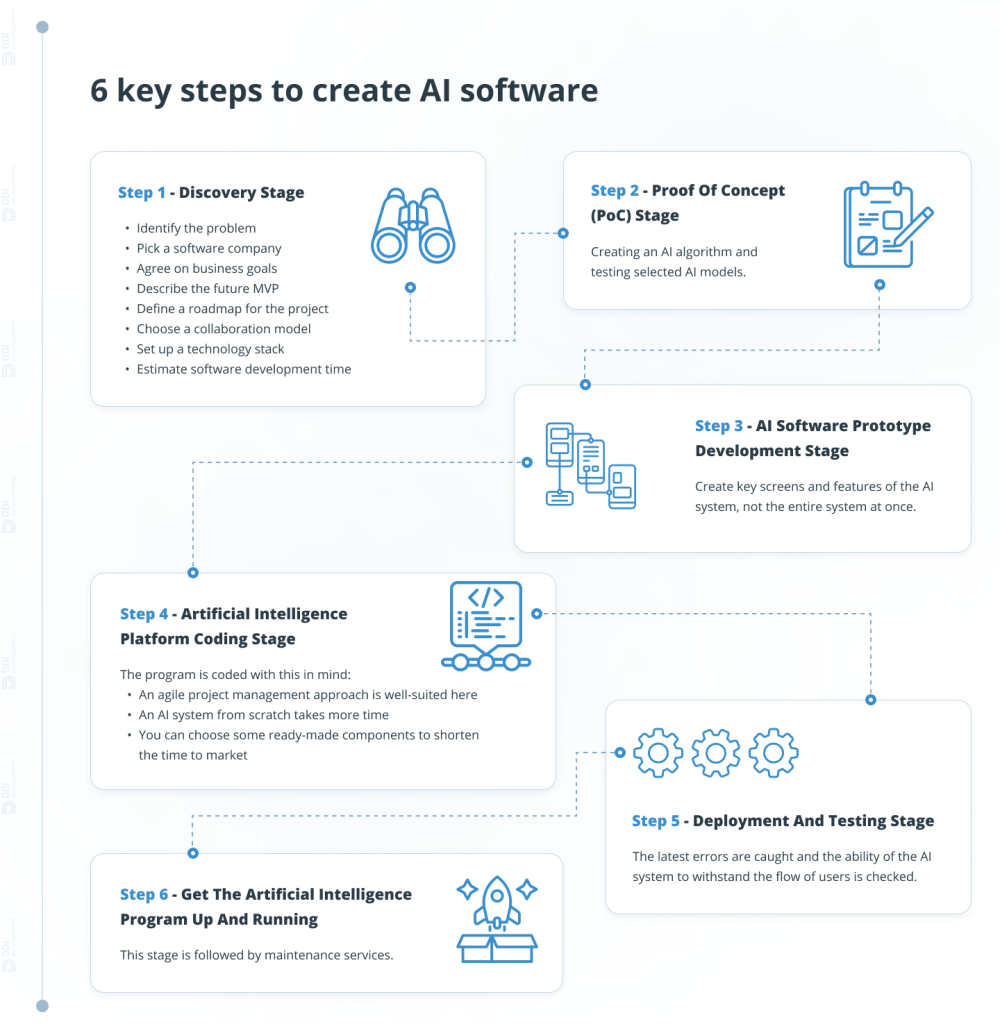
- Understanding AI Applications:
- Defining the Purpose: Before diving into development, it’s crucial to clearly define the purpose of your AI app. Whether it’s enhancing user experience, automating tasks, or solving complex problems, a well-defined objective will guide your development process.
- Identifying Target Audience: Understanding your target audience is essential for tailoring your AI app to meet their specific needs and preferences. Conduct market research to identify your potential users’ demographics, behaviors, and pain points.
- Choose the Right AI Technology:
- Machine Learning vs. Deep Learning: Determine whether your AI app requires machine learning algorithms, which excel at tasks like classification and regression, or deep learning models, which are ideal for tasks involving unstructured data like images, text, and speech.
- Frameworks and Tools: Selecting the appropriate AI frameworks and tools is crucial for efficient development. Popular choices include TensorFlow, PyTorch, and scikit-learn for machine learning, and libraries like Keras and OpenCV for deep learning and computer vision tasks.
- Data Collection and Preparation:
- Data Acquisition: Gather relevant data that aligns with your app’s objectives. This can include structured data from databases, unstructured data from social media feeds, or even user-generated content.
- Data Preprocessing: Cleanse and preprocess the collected data to remove noise, handle missing values, and standardize formats. Effective preprocessing ensures that your AI model learns from high-quality data, leading to more accurate predictions.
- Model Development and Training:
- Model Selection: Choose the appropriate machine learning or deep learning model architecture based on your app’s requirements and data characteristics. Experiment with different models to find the one that yields the best performance.
- Training Process: Train your AI model using the prepared data, adjusting hyperparameters and optimization techniques as necessary to improve performance. Monitor the training process to detect overfitting or underfitting and make necessary adjustments.
- Integration and Deployment:
- Integration with Application: Integrate the trained AI model into your application’s backend or frontend, depending on the app’s architecture. Ensure seamless communication between the AI components and other modules of the app.
- Deployment Options: Choose a deployment strategy that suits your app’s scalability, performance, and maintenance requirements. Options include cloud-based platforms like AWS and Azure, on-premises servers, or edge devices for edge computing.
- Testing and Evaluation:
- Testing Methodologies: Conduct rigorous testing to evaluate the performance, accuracy, and robustness of your AI app. Implement unit tests, integration tests, and end-to-end tests to identify and fix potential bugs and issues.
- User Feedback: Gather feedback from early adopters and beta testers to understand user satisfaction, identify areas for improvement, and iterate on your AI app’s features and functionalities.
- Continuous Improvement and Maintenance:
- Iterative Development: Embrace an iterative development approach, continuously refining and enhancing your AI app based on user feedback, emerging technologies, and changing market trends.
- Maintenance and Updates: Regularly maintain and update your AI app to ensure compatibility with new operating systems, security patches, and evolving user requirements. Monitor performance metrics and user engagement to drive future enhancements.
Conclusion:
Building an AI app may seem daunting at first, but with a systematic approach and the right resources, anyone can embark on this rewarding journey. By understanding the fundamentals of AI applications, choosing the right technologies, and following best practices in development, you can create innovative AI-powered solutions that positively impact society. So roll up your sleeves, unleash your creativity, and start building your own AI app today!
Read More: https://www.leewayhertz.com/how-to-build-an-ai-app/
 New Tech news
Leave a comment