Introduction
In the ever-evolving landscape of Information Technology (IT), Artificial Intelligence (AI) stands out as a transformative force, reshaping the way businesses operate, how data is analyzed, and how technology interfaces with human activities. From enhancing efficiency to enabling predictive analytics, AI has become synonymous with innovation in IT.
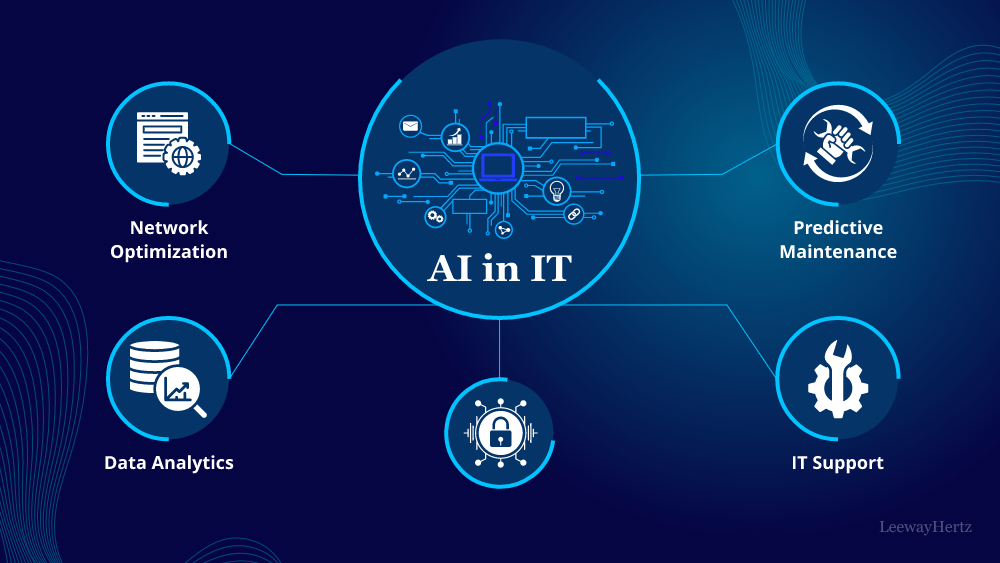
Understanding AI in IT
Artificial Intelligence, a branch of computer science, aims to create systems that can perform tasks requiring human intelligence. In the realm of IT, AI manifests through various applications such as machine learning, natural language processing (NLP), and computer vision. These applications enable machines to learn from data, recognize patterns, and make decisions with minimal human intervention.
Enhanced Automation
One of the primary impacts of AI in IT is automation. Through machine learning algorithms, repetitive tasks such as data entry, network management, and system monitoring can be automated, freeing up human resources for more strategic endeavors. This automation not only improves operational efficiency but also reduces the margin of error, leading to enhanced reliability and consistency in IT processes.
Predictive Analytics
AI-powered predictive analytics has revolutionized decision-making in IT. By analyzing vast amounts of data, AI algorithms can identify patterns and trends, enabling organizations to anticipate future outcomes. From predicting system failures to forecasting customer demand, predictive analytics empowers IT professionals to proactively address issues and capitalize on opportunities, ultimately driving business growth.
Optimized Resource Allocation
AI-driven optimization algorithms play a crucial role in resource allocation within IT infrastructure. Whether it’s allocating computing resources in cloud environments or optimizing network traffic, AI enables dynamic adjustments based on real-time data analysis. This ensures optimal performance, scalability, and cost-efficiency, aligning IT resources with organizational objectives.
Cybersecurity
In an era of increasing cyber threats, AI has emerged as a formidable ally in the fight against cybercrime. AI-powered security solutions leverage machine learning to detect and respond to security breaches in real-time. By analyzing network traffic patterns and identifying anomalies, these systems can thwart attacks before they cause significant damage. Additionally, AI enables predictive threat intelligence, allowing organizations to stay one step ahead of cyber adversaries.
Natural Language Processing (NLP)
NLP, a subset of AI, has transformed human-computer interaction within IT. Chatbots and virtual assistants powered by NLP algorithms enable users to interact with IT systems using natural language commands. Whether it’s troubleshooting technical issues or retrieving information from databases, NLP enhances user experience and streamlines IT service delivery.
Challenges and Considerations
Despite its transformative potential, the widespread adoption of AI in IT comes with challenges and considerations. Concerns surrounding data privacy, algorithm bias, and ethical implications necessitate careful scrutiny and regulatory oversight. Additionally, the need for continuous upskilling and reskilling of IT professionals to leverage AI technologies underscores the importance of investing in education and training initiatives.
The Future of AI in IT
Looking ahead, the integration of AI into Information Technology is poised to accelerate further. Advancements in deep learning, reinforcement learning, and quantum computing promise to unlock new possibilities and push the boundaries of what AI can achieve in IT. From autonomous systems to personalized user experiences, the future of AI in IT holds immense potential for innovation and disruption.
Conclusion
Artificial Intelligence has ushered in a new era of innovation and transformation in Information Technology. From automation and predictive analytics to cybersecurity and natural language processing, AI applications are reshaping the digital landscape, driving efficiency, and empowering organizations to thrive in an increasingly competitive environment. As AI continues to evolve, its integration into IT will undoubtedly redefine the way we work, communicate, and interact with technology. Embracing this technological revolution is not just a choice but a necessity for organizations seeking to stay ahead in the digital age.
 New Tech news
Leave a comment