Introduction:
In the era of Big Data and Artificial Intelligence, Large Language Models (LLMs) have emerged as powerful tools for natural language understanding and generation. However, concerns surrounding data privacy and security have cast a shadow over their widespread adoption. To address these concerns, a promising approach called Build-Private-LLMs has gained traction. In this article, we delve into the concept of Private LLMs and explore how Build-Private-LLMs are paving the way for a more privacy-preserving future in AI.
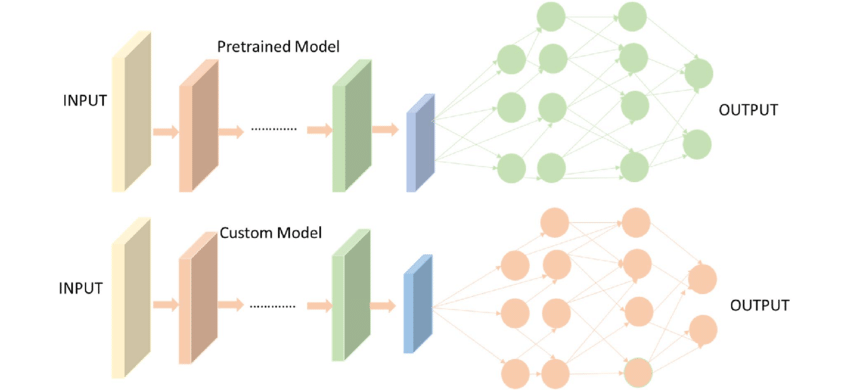
Understanding Large Language Models:
Large Language Models (LLMs) are sophisticated AI systems trained on vast amounts of text data, enabling them to comprehend and generate human-like text. They have revolutionized various fields, including natural language processing, content generation, and conversational AI. However, the massive datasets required for training LLMs often raise privacy and ethical concerns, particularly regarding sensitive information and user data.
The Need for Privacy-Preserving Solutions:
In an age where data breaches and privacy violations are prevalent, safeguarding sensitive information is paramount. Traditional LLMs, while highly capable, often entail risks associated with data exposure and misuse. This has spurred the development of privacy-preserving techniques aimed at mitigating these risks without compromising performance.
Introducing Private LLMs:
Private LLMs are a class of language models designed with privacy as a core consideration. Unlike conventional LLMs, which may inadvertently memorize and expose sensitive data from their training corpora, Private LLMs employ advanced cryptographic and privacy-preserving techniques to protect user privacy. These models offer a compelling solution for organizations and individuals seeking to leverage AI capabilities while upholding data confidentiality and integrity.
The Build-Private-LLM Paradigm:
At the forefront of privacy-preserving LLMs lies the Build-Private-LLM paradigm. This approach emphasizes constructing language models in a privacy-preserving manner from the ground up. By integrating cryptographic protocols such as secure multi-party computation (MPC) and homomorphic encryption into the training process, Build-Private-LLMs ensure that sensitive information remains encrypted throughout the training phase.
Securing Training Data with MPC:
Secure multi-party computation (MPC) enables multiple parties to jointly compute a function over their inputs while keeping those inputs private. In the context of Build-Private-LLMs, MPC allows data owners to collaborate on training a language model without disclosing their raw data to each other or to the central training server. This distributed approach ensures that no single entity has access to the complete dataset, thus bolstering privacy.
Harnessing Homomorphic Encryption:
Homomorphic encryption is another cornerstone of Build-Private-LLMs, enabling computations to be performed directly on encrypted data. By leveraging homomorphic encryption during model training and inference, Private LLMs can operate on sensitive information in its encrypted form, preventing unauthorized access to plaintext data at all stages of the AI pipeline. This cryptographic technique offers a robust layer of protection against data breaches and unauthorized access.
Balancing Privacy and Performance:
While privacy is paramount, maintaining model performance is equally important. Build-Private-LLMs strive to strike a delicate balance between privacy and performance, ensuring that the privacy-preserving mechanisms employed do not compromise the utility of the resulting language model. Through careful optimization and innovation, researchers continue to enhance the efficiency and effectiveness of Private LLMs, making them increasingly viable for real-world applications.
Applications and Implications:
The advent of Build-Private-LLMs opens up a myriad of opportunities across various domains. From healthcare and finance to legal and educational sectors, organizations can harness the power of Private LLMs to analyze sensitive data, generate personalized content, and facilitate secure communications. Moreover, the adoption of privacy-preserving AI technologies can foster greater trust among users and promote ethical AI practices on a global scale.
Challenges and Future Directions:
Despite their promise, Build-Private-LLMs are not without challenges. Overcoming scalability issues, optimizing computational efficiency, and addressing regulatory concerns are among the key hurdles facing the widespread adoption of Private LLMs. However, ongoing research efforts and collaborations within the AI community are driving progress towards more scalable, efficient, and regulatory-compliant privacy-preserving solutions. As the field continues to evolve, the future looks promising for Build-Private-LLMs and the broader landscape of privacy-preserving AI.
Conclusion:
In an age where data privacy is paramount, Build-Private-LLMs offer a beacon of hope for safeguarding sensitive information in the realm of Large Language Models. By integrating cryptographic and privacy-preserving techniques into the fabric of AI development, Private LLMs pave the way for a more secure, trustworthy, and ethically responsible AI ecosystem. As researchers and practitioners continue to innovate and refine these privacy-preserving solutions, the journey towards unlocking the full potential of AI while respecting user privacy marches onward.
 New Tech news
Leave a comment