In the fast-paced landscape of data science and machine learning, the need for efficient model management has given rise to a transformative discipline known as ModelOps. This article delves into the fundamental aspects of ModelOps, exploring its definition, use cases, and the myriad benefits it brings to the world of data-driven decision-making.
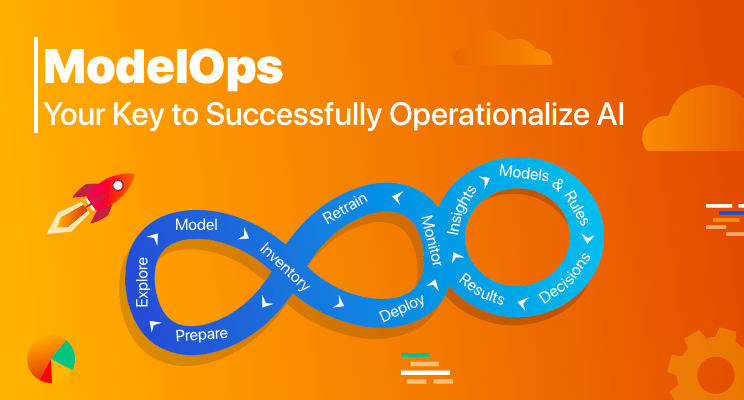
Understanding ModelOps: A Holistic Approach to Model Management
Defining ModelOps
ModelOps, short for Model Operations, is an innovative methodology that addresses the challenges associated with deploying, managing, and monitoring machine learning models in production. It encompasses a set of practices and principles designed to streamline the entire lifecycle of a machine learning model, from its development and training to its deployment and ongoing optimization.
Key Components of ModelOps
- Collaboration and Communication:
ModelOps emphasizes collaboration among cross-functional teams, including data scientists, data engineers, IT operations, and business stakeholders. Effective communication ensures that everyone involved is aligned with the objectives and requirements throughout the model’s lifecycle. - Automation:
Automation is a cornerstone of ModelOps. By automating repetitive tasks such as model deployment, monitoring, and scaling, organizations can accelerate the time-to-value for machine learning initiatives. This not only enhances efficiency but also reduces the risk of manual errors. - Continuous Integration and Deployment (CI/CD):
ModelOps borrows principles from software development, advocating for continuous integration and deployment practices. This allows organizations to deliver updates and improvements to models rapidly, ensuring that they stay relevant and effective in dynamic environments.
Use Cases of ModelOps: Bridging the Gap Between Development and Deployment
1. Seamless Model Deployment:
Use cases of ModelOps involve streamlining the deployment process, enabling organizations to transition seamlessly from model development to deployment. This ensures that the valuable insights generated by machine learning models are effectively integrated into business processes.
2. Real-time Model Monitoring:
Continuous monitoring is critical for ensuring the ongoing performance and accuracy of machine learning models. ModelOps facilitates real-time monitoring, allowing organizations to detect anomalies, address issues promptly, and maintain the reliability of deployed models.
3. Scalability and Resource Optimization:
As machine learning initiatives scale, ModelOps becomes indispensable in managing the resources efficiently. It automates the scaling of infrastructure based on demand, optimizing resources and ensuring cost-effectiveness in model deployment.
4. Collaboration Across Teams:
Model development often involves collaboration between data scientists, data engineers, and business stakeholders. ModelOps fosters this collaboration by providing a standardized framework for communication, ensuring that all stakeholders are on the same page throughout the model’s lifecycle.
5. Version Control and Rollback:
Version control is crucial in managing the evolution of machine learning models. ModelOps provides mechanisms for versioning models, making it easy to roll back to previous versions if issues arise after deployment. This ensures a reliable and controlled model deployment process.
Benefits of ModelOps: Maximizing the Value of Machine Learning Models
1. Accelerated Time-to-Value:
ModelOps significantly reduces the time it takes to move a machine learning model from development to deployment. This acceleration is critical in realizing the value of machine learning initiatives promptly and gaining a competitive edge.
2. Improved Model Performance:
Continuous monitoring and optimization facilitated by ModelOps contribute to improved model performance over time. Organizations can proactively address issues, refine models, and ensure that they remain effective in dynamic and evolving business landscapes.
3. Cost Efficiency:
Through automation and efficient resource management, ModelOps minimizes unnecessary costs associated with model deployment. This is particularly vital as organizations strive to achieve optimal returns on their machine learning investments.
4. Enhanced Collaboration and Communication:
ModelOps breaks down silos between different teams involved in the model development and deployment process. Improved collaboration and communication lead to a more cohesive and aligned effort, ensuring that models meet business objectives effectively.
5. Risk Mitigation:
The ability to monitor models in real-time and roll back to previous versions provides a safety net against potential risks. ModelOps helps mitigate the risks associated with deploying machine learning models in production, fostering a secure and reliable environment.
Conclusion: Paving the Way for Effective Model Management
In conclusion, ModelOps emerges as a pivotal discipline in the realm of data science and machine learning, bridging the gap between model development and deployment. By embracing the principles of collaboration, automation, and continuous improvement, organizations can unlock the full potential of their machine learning models. ModelOps not only accelerates time-to-value but also ensures that models remain resilient, efficient, and aligned with evolving business needs. As the data-driven landscape continues to evolve, the adoption of ModelOps is poised to become a strategic imperative for organizations seeking to harness the true power of machine learning in their operations.
 New Tech news
Leave a comment